USDA Plant Hardiness Zones: Choosing Colorado Perennials
A USDA hardiness zone is a useful first filter when you’re choosing perennials, but Colorado gardens can vary sharply over short distances. A plant rated for your zone may still struggle with wind, dry soil, winter sun, or a late freeze. Use the map to narrow your choices, then match each plant to the conditions in your yard.
What a USDA hardiness zone tells you
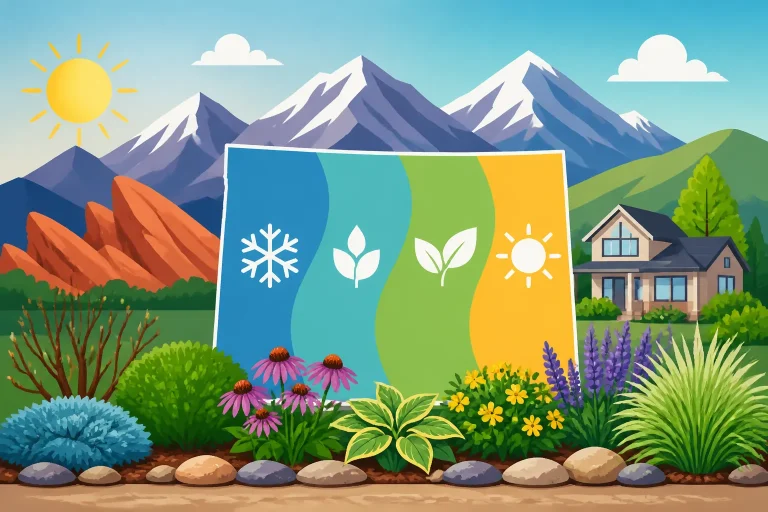
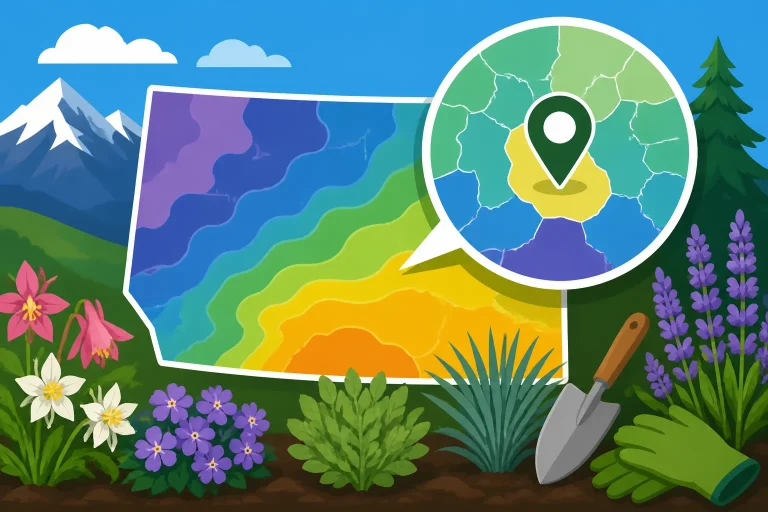
The USDA Plant Hardiness Zone Map is based on the average annual extreme minimum winter temperature in an area. Its main use is to help estimate whether a perennial, shrub, or tree is likely to survive winter cold where it is planted.
A plant label might show a range of zones. That range describes the winter temperatures the plant is generally considered able to withstand, not a promise that it will thrive in every garden within those zones. If your ZIP code falls within the plant’s listed range, the plant is a candidate—not a guaranteed success.
Hardiness zones do not tell you:
- How hot your summer gets or how long it lasts
- When spring or fall freezes are likely
- Whether the plant will get enough sunlight
- Whether your soil drains quickly or stays wet
- How much water the plant needs during the growing season
- Whether wind or winter sun will dry it out
- Whether the plant will flower or fruit reliably in your particular spot
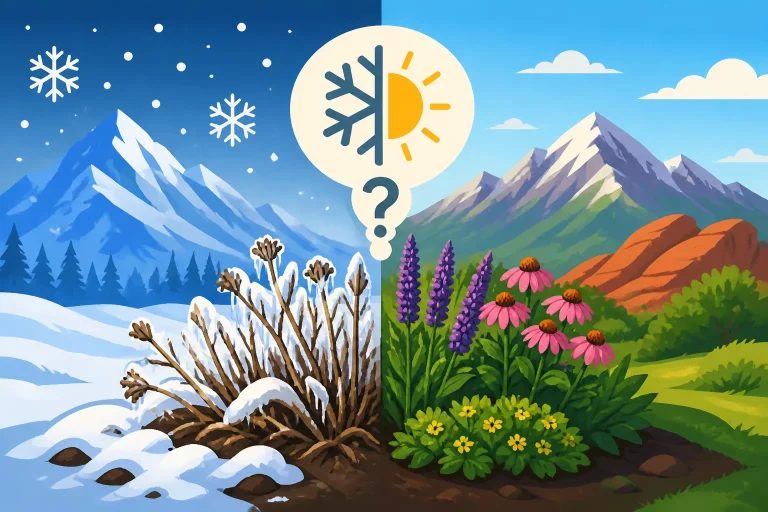
That distinction matters in Colorado. A plant can survive the coldest part of winter but fail to flower well, grow slowly, or decline from conditions the map does not measure. Conversely, some plants can survive winters colder than their listed range when they have shelter, reliable snow cover, and well-drained soil.
Use the zone rating as a screening tool. If a plant’s listed range does not include the zone for your area, it may carry more winter risk. If the rating does include it, continue checking the plant’s needs for sun, soil, water, and exposure before buying.
The map also does not replace a growing-season calendar. A perennial’s ability to withstand winter cold is different from the question of when to plant it or whether it will have enough time to flower. For vegetable timing, see Why Winter Zones Do Not Determine Vegetable Planting Dates. For Colorado perennial selection, the most useful approach is to combine the zone rating with the conditions in the bed where the plant will grow.
Why Colorado yards can differ from the map
Colorado’s elevation, terrain, and local weather patterns make it especially important to look beyond a broad map result. A ZIP code can cover places with different exposures and growing conditions, and even neighboring yards may behave differently.
Elevation and terrain
Elevation influences temperature and the length of the growing season. Mountain communities, foothills, valleys, and plains do not share identical conditions. A perennial that performs well in a sheltered lower-elevation garden may have a harder time in a cooler, more exposed site.
Terrain adds variation. Cold air can settle in low spots, while an elevated or sloping garden may drain cold air more readily. South-facing slopes and walls often warm earlier and receive more intense sun. North-facing areas tend to stay cooler and may hold snow or moisture longer.
A map result for a ZIP code is a useful starting point, but it cannot describe every slope, hollow, or sheltered corner. Using the USDA Plant Hardiness Zone Map by ZIP Code explains how to use a ZIP-code result as a broad reference rather than a precise yard-level forecast. For a closer look at local variation, see Can Your Colorado Garden Zone Differ From Your ZIP-Code Result?.
Wind, snow, and winter sun
Winter cold is only one part of the challenge. Dry wind can pull moisture from stems and leaves, especially when the ground is frozen and roots cannot replace what has been lost. A plant in an open, windy spot may suffer more than the same plant beside a building or behind a suitable windbreak.
Snow cover can insulate crowns and roots from temperature swings. But snow does not fall evenly across a yard. Wind can sweep it off one bed and pile it in another. A plant rating cannot tell you whether your planting area will have dependable snow cover.
Winter sun can also stress plants. A south- or west-facing wall may warm during the day, then cool quickly at night. Evergreen or broad-leaved plants can lose moisture under strong winter sun and wind. In exposed areas, choosing a plant solely because its zone rating appears suitable may leave you with a plant that survives in a protected bed but struggles in the open.
The map is not a planting calendar
The hardiness map describes winter minimum temperatures. It does not predict the timing of the last spring freeze or the first fall freeze, and it does not show how many growing-season days a plant gets.
That difference matters when selecting perennials that need a long, warm season to mature, flower, or set seed. A plant can be winter-hardy but still perform poorly if its growth cycle does not fit the local season. When choosing plants for a mountain or short-season garden, consider growing-season length alongside winter survival. Colorado Hardiness Zones Across Plains, Foothills, and Mountains and How Elevation Changes Colorado Frost Dates and Season Lengths address these regional differences.
How to choose perennials using zone ratings
Start with the conditions you can describe, then use the map to screen possible plants. This is more dependable than buying a plant because it is labeled “hardy” or choosing one based only on a zone number.
Make a short site checklist
Before selecting plants, note the conditions in the bed:
- Exposure: Is it in full sun, partial shade, or shade? Does the light change during the day?
- Wind: Is the site open to prevailing winds, or protected by a fence, wall, or existing planting?
- Drainage: Does water soak in, run off, or remain after rain or irrigation?
- Soil: Is it heavy clay, sandy, rocky, or a mixture? Does the area dry quickly?
- Winter cover: Does snow usually stay in the bed, or is it often blown away?
- Heat and reflected light: Is the bed beside pavement, a wall, or another surface that warms or reflects sunlight?
- Water access: Can you provide moisture while new plants establish, and does the bed receive regular irrigation later?
This inventory helps you decide which plant labels to read closely. A dry, sunny bed calls for different plants than a shaded area with slower drainage, even if both sites fall in the same hardiness zone.
Read the whole plant label
Check more than the zone range. Look for the plant’s preferred sun exposure, mature size, soil needs, moisture requirements, and any notes about drainage or winter protection. A label that lists a suitable zone but also calls for moist, rich soil may be a poor fit for a dry, rocky site.
If information is limited, ask the nursery where the plant was grown and whether it has performed well in comparable Colorado conditions. A plant that is locally grown or recommended for similar soils may be a better starting point than one selected from a national catalog description alone. Still, local origin does not guarantee success: the plant must suit the exact exposure and moisture of your bed.
Check whether the plant is a true perennial in your conditions. Some plants sold as perennials may survive only in milder or more protected parts of a region, or may be short-lived even when winter-hardy. The listing can also describe hardiness in a different climate context than your garden. For additional guidance on interpreting winter ratings, see Reading the USDA Plant Hardiness Zone Map for Winter Survival.
Prefer a margin of safety in exposed sites
If a garden bed is windy, loses snow cover, or has a history of winter damage, choose plants with a comfortable margin within their listed hardiness range rather than pushing the warmest edge of what might survive. A borderline plant may be worth trying in a protected microclimate, but it is a riskier choice for an exposed bed where replacement would be difficult.
That does not mean every garden needs only the toughest possible plants. A sheltered courtyard, a protected foundation bed, or a spot with reliable snow cover may allow you to experiment. Think of borderline choices as trials: plant a small number first, observe them through winter, and expand only if they establish and return reliably. Will Perennials Survive Extreme Winter Cold if Your Zone Changed? discusses why a zone rating alone cannot predict the outcome of every winter.
Match the plant to the conditions in your bed
A suitable zone rating is a starting point. The best perennial for a Colorado garden is one that also fits the bed’s light, soil, water, and exposure. Plants that are mismatched to these conditions may decline even when winter cold is within their listed tolerance.
For sunny, dry, exposed beds
For a sunny site that dries quickly, look for perennials described as tolerant of dry conditions once established. Widely available choices to investigate include blanket flower and Rocky Mountain penstemon. Their suitability still depends on the particular species or selection, the soil, and the amount of water the bed receives.
Do not assume that “drought tolerant” means a new plant needs no care. Newly planted perennials generally need attention while their roots establish. A plant that can manage with less water later may still struggle if its root zone dries out soon after planting. In exposed, windy sites, the first growing season can be especially demanding.
Avoid choosing plants simply because they are native to Colorado. The state includes many different habitats, so a species from a moist, sheltered setting may not be a fit for a hot, dry slope. Match the plant to the local conditions it is adapted to, not just to the state name on a tag. Why Native Perennials Fit Colorado Soils Better Than Exotics explains why regional adaptation can be useful while still requiring attention to site needs.
For part shade or shade
Shade is not one uniform condition. A bed under a deciduous tree may receive spring light before the canopy fills in, while a spot beside a north-facing wall may remain cool and shaded for much of the day. Dry shade under trees can be particularly challenging because nearby roots compete for water.
Read the light requirements carefully. A plant that tolerates partial shade may still need several hours of direct light to flower well. A plant that prefers shade may scorch or dry out in hot afternoon sun, even if the zone rating is appropriate.
Check moisture too. Some shade-loving perennials need consistently moist soil, while others tolerate dry shade once established. Do not add water automatically to a shady bed without checking how quickly the soil dries; poor drainage can cause root problems. Where the soil is heavy, assess drainage and adjust the planting plan rather than assuming all shade plants will thrive in it.
For heavy, alkaline, or rocky soil
Colorado soils vary, but many gardeners encounter heavy clay, alkaline conditions, or rocky ground. A plant’s ability to tolerate winter cold does not mean it can cope with slow drainage or a soil chemistry that does not suit it.
First, observe the site. Does water puddle after irrigation? Does the soil dry into hard clods, or does it drain rapidly through gravel and rock? These observations can help identify whether the main issue is drainage, moisture retention, or both.
Avoid trying to fix every soil problem by digging a small pocket of amended soil around each plant. A sharp boundary between amended planting soil and surrounding clay can affect how water moves. Instead, choose plants suited to the site where possible, and plan soil improvements in a way that considers the whole bed. For broader soil guidance, see Colorado Garden Soil Preparation: Building Beds and Soil Tilth and How to Test Garden Soil Drainage Rate Before Digging Plant Beds.
A practical comparison
| Garden condition | What to look for | Common risk to check |
|---|---|---|
| Sunny, windy, and dry | Sun-loving plants that tolerate dry conditions once established | New plants drying before roots establish |
| Part shade with dry soil | Plants suited to shade and lower moisture | Competition from tree roots |
| Shade with slow drainage | Plants that tolerate the light and moisture level | Roots staying too wet |
| Exposed bed with little snow cover | Plants with a comfortable winter-hardiness margin | Wind and winter sun drying stems |
| Sheltered courtyard | Plants suited to the light and soil, with room for limited trials | Warm winter spells followed by cold snaps |
| Heavy or rocky soil | Plants that fit the drainage and texture, or a planned bed improvement | Root stress from unsuitable soil structure |
Plan for establishment, not just winter survival
A perennial’s first growing season helps determine how well it can handle later winters. A plant that has had time to build roots is generally better positioned to face cold and dry conditions than one that is still establishing. That makes planting and aftercare part of hardiness planning.
Choose a planting window that lets roots settle
Spring and fall can both work for planting perennials, but the right timing depends on local soil and weather conditions. Avoid planting into frozen ground, and be cautious when heat or dry wind is likely to stress new plants. A plant needs time to settle in before facing the harshest conditions, so consider how much establishment time the local season provides.
If you are unsure whether a plant is well suited to your garden, start with a small group rather than filling an entire bed. A modest trial can reveal whether the plant tolerates the light, soil, and winter exposure. Keep track of where it was planted and what conditions it faced so that a failure is useful information, not just a reason to buy replacements.
Water according to the root zone
New perennials need moisture around their root balls and in the surrounding soil. The goal is to help roots grow outward, not to keep the soil continuously saturated. Check the soil before watering, especially in heavy clay or in a shaded bed that dries slowly.
Plants described as drought tolerant may need regular attention while establishing. Later, their water needs depend on the species, the soil, the weather, and the bed’s exposure. Do not apply a single schedule to every plant in a mixed border. Soil Moisture Checks Before Watering Colorado Vegetable Crops covers soil checking techniques that can also help gardeners understand moisture conditions in planting beds. For general landscape timing, see Morning vs Evening Garden Watering in Colorado.
Mulch thoughtfully
Mulch can help reduce moisture loss and moderate soil temperature, but keep it from being piled against plant crowns or stems. A thick or poorly placed layer can hold too much moisture near the crown, particularly in a site that drains slowly. The right amount and material depend on the bed and the plant.
Observe how the soil behaves after watering and rain. If the surface stays wet for a long time, adding more moisture-retaining material may not help. If the bed dries quickly, a suitable mulch can reduce evaporation while the plants establish. For more detail, see Mulching Colorado Garden Beds: Moisture, Weed Control, and Bark.
Protect plants without trapping damaging heat
Temporary covers can help during a cold snap, but they are not a substitute for choosing plants suited to the site. Covers can also trap heat on sunny days, so they need to be managed according to the material and conditions. Do not assume that covering a borderline perennial will make it reliably hardy.
Winter protection should address the actual problem. A wind-exposed plant may benefit more from a better location than from a covering that repeatedly blows loose. A plant in poorly drained soil is unlikely to be helped by extra insulation if its roots stay wet. First identify whether the risk is cold, desiccation, drainage, or a combination.
Common mistakes when choosing Colorado perennials
Treating a ZIP-code result as a yard-level answer
A ZIP-code search provides a broad indication of the winter climate. It cannot account for your yard’s elevation, slope, wind exposure, shade, or snow patterns. Use the result to narrow choices, then check the planting site itself.
Assuming “hardy” means “low maintenance”
Hardiness is about winter cold tolerance, not care requirements. A winter-hardy perennial can still need a particular soil type, consistent moisture, or protection from strong afternoon sun. Read the full description and compare it with the bed rather than relying on a single word.
Choosing for the best-case microclimate
A sheltered bed beside a wall may be warmer than an exposed yard, but it may also have reflected heat, uneven moisture, or drying wind. A plant that survives in that spot may not be suitable elsewhere in the garden. If you want to try a borderline choice, treat the site as a small experiment and avoid assuming the result applies to every bed.
Confusing survival with good performance
A perennial may return after winter but remain small, flower poorly, or fail to spread. If a plant survives but never looks healthy, review its sun, soil, moisture, and growing-season needs. The zone rating may have answered only one question.
Buying a large quantity before testing a plant
A display of attractive flowers can make it tempting to fill a bed at once. But if the plant is not a known fit for your conditions, buy a small number first. Give the plants a full cycle of growth and winter before expanding the planting. This is particularly useful for exposed gardens and for plants near the edge of their listed hardiness range.
A decision process for your next perennial purchase
Use the same steps each time you choose a plant. A consistent process helps you compare options and reduces the chance of relying on a single map result or plant label.
- Identify the bed. Record its light, drainage, soil texture, wind exposure, and winter snow cover.
- Check the plant’s hardiness rating. Confirm that the listed range includes the broad area where you garden, while treating the rating as a screening tool.
- Read beyond the rating. Check moisture, soil, sun, mature size, and any notes about exposure or winter care.
- Compare the plant with the site. Reject options that need conditions the bed cannot provide unless you are prepared to modify the bed.
- Consider local recommendations. Look for guidance on plants that suit similar Colorado conditions, and ask knowledgeable local nursery staff about performance in comparable settings.
- Start small when uncertain. Trial a few plants, note where they are planted, and assess both their growth and their return after winter.
- Adjust based on results. If a plant struggles, investigate its growing conditions before assuming the zone rating was wrong.
The zone map is most useful when it is part of this process rather than the whole process. It can help you avoid choices that are clearly poorly matched to winter cold, while site observations help you choose among plants that are plausible candidates. For more Colorado-specific options, Picking Perennials That Reliably Survive Local Winter Cold and Tough Colorado Native Plants That Endure Hail, Frost, and Heat can help you continue narrowing the list.
Frequently Asked Questions
Does a plant rated for my zone automatically survive in my yard?
No. The rating indicates a general tolerance for winter minimum temperatures. Wind, snow cover, soil drainage, winter sun, and establishment can all affect whether the plant survives and performs well.
Should I choose only plants rated for colder winters?
Not necessarily. A plant with a comfortable hardiness margin is a sensible choice for an exposed site, but a sheltered bed may support more experimentation. Match the plant to the specific conditions, and trial borderline choices in small numbers.
Can a perennial survive winter but still fail to thrive?
Yes. A plant may survive cold but struggle with unsuitable light, soil, moisture, wind, or growing-season length. Survival and consistent flowering or healthy growth are different outcomes.
Are Colorado native perennials always the best choice?
No. A native plant may be adapted to a particular habitat, but Colorado includes varied climates and soils. Choose a species whose light, moisture, and soil needs match your garden.
Disclaimer
This article is for general informational purposes only and does not constitute professional advice. Laws, prices and regulations vary by location and change over time. Consult a qualified professional for guidance on your specific situation. Colorado Gardening Guide is not a government agency and is not affiliated with any university extension, state department of agriculture or other government agency.