When to Run Sprinklers and Drip Lines in Foothills Gardens
In Colorado foothills gardens, a sprinkler schedule that works one week can waste water the next: wind, slope, sun exposure, soil and summer heat all change how quickly beds dry. The best time to irrigate is usually early morning, but the right schedule depends on what you’re watering and what the soil is doing. Here’s how to set up sprinklers and drip lines around those conditions.
Choose an Irrigation Time That Fits Foothills Weather
For most home gardens, early morning is a practical time to run irrigation. Temperatures are generally cooler and winds often lighter than later in the day, giving water a better chance to reach the root zone before it evaporates or blows off target. Morning watering also gives leaves time to dry after sprinkler use.
That timing is a starting point, not a rule that overrides local restrictions or the conditions in your yard. Check current watering rules for your town or water provider, including any limits on days or hours. Rules can differ between communities and may change. Garden Watering Rules in Colorado: Permitted Days and Hours
Why early morning is usually a good choice
Water applied in the morning is less exposed to strong midday sun. It can soak into the ground before the hottest part of the day, when plants may be using water quickly. For overhead sprinklers, morning irrigation also reduces the time leaves stay wet compared with watering late in the evening.
The aim is not to leave the soil saturated all day. It is to get water to the roots while limiting waste. If the ground is already moist, skip or shorten a scheduled run rather than watering automatically. A timer is useful for consistency, but it cannot tell whether the soil still has enough moisture after rain or a cool spell.
When evening watering may make sense
There are situations when early morning is not practical, such as a system that can only be operated at another permitted time. Evening watering may be less concerning with drip lines because the water is delivered near the soil rather than sprayed over foliage. With sprinklers, however, wet leaves can remain wet overnight, which may favor some plant diseases.
If you must water in the evening, direct sprinkler coverage toward the soil as much as possible and avoid routinely soaking foliage. Follow local rules, and watch plants for signs of disease. A drip system can be a useful alternative for beds where leaves are repeatedly wetted by overhead irrigation.
Why midday is often inefficient
Watering during the hottest, sunniest part of the day can increase evaporation, particularly when wind is moving across the garden. Sprinklers can also lose water to wind drift, leaving some areas too dry while others receive excess water. Drip irrigation is less exposed to that problem because water is applied close to the soil, but extreme heat still affects how quickly plants use moisture.
If a plant is visibly wilting during a hot afternoon, don’t assume that more irrigation is always the answer. Some plants wilt temporarily in heat even when the soil is damp. Check the root zone before adding water. If the soil is dry and the plant is under stress, water when permitted and adjust the next scheduled irrigation after checking how the soil responds.
Match the Schedule to the System and the Garden
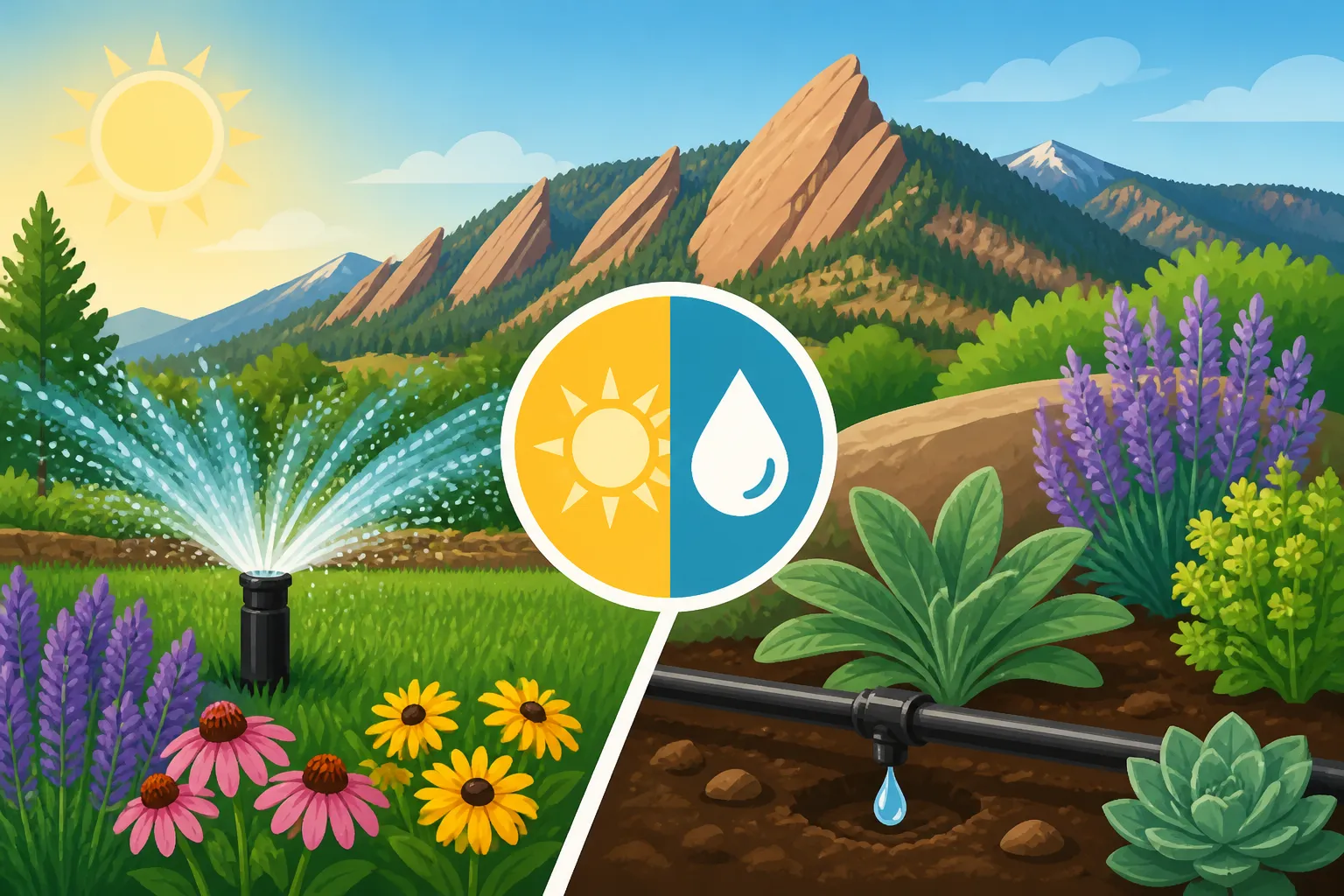
Sprinklers and drip lines distribute water differently, so they need different checks and adjustments. A sprinkler covers a broad area but may wet foliage and nearby paths. Drip irrigation puts water close to plant roots but may leave dry gaps if emitters are spaced too far apart, blocked or poorly placed.
Neither system has one best schedule for every foothills yard. Beds on a sunny slope may dry faster than a shaded garden with deeper, moisture-holding soil. Plants with different water needs may also require separate zones. Colorado Garden Irrigation Calendar: Shifting From Spring to Fall
| Irrigation method | Where it can work well | What to watch | Useful scheduling cue |
|---|---|---|---|
| Sprinkler | Broad areas of lawn or planted ground | Wind drift, runoff on slopes, wet foliage and uneven coverage | Check the soil and the coverage across the whole area |
| Drip line | Vegetable beds, shrubs and plantings where water should reach the soil directly | Clogged emitters, leaks and dry pockets between emitters | Check moisture near plants at different points along the line |
| Soaker hose | Smaller beds with plants arranged in rows or groups | Uneven flow, kinks and water running off sloping ground | Inspect the soil along the hose, not just at one end |
| Hand watering | Containers, individual plants and small dry spots | Missing parts of the bed or watering only the surface | Check below the top layer of soil after watering |
Sprinklers: check the pattern, not just the timer
Sprinkler heads can become blocked, tilted or misdirected. A head that sprays onto a wall or path wastes water while leaving part of the planting dry. Wind can also change how well a sprinkler reaches the intended area. Walk the garden while the system runs and look for overspray, puddles and uncovered patches.
Simple catch containers can help you compare how much water different parts of a sprinkler zone receive. Place several containers across the area, run the system, and compare the collected water. If one side gets noticeably more than another, adjust the heads or split the area into separate zones rather than compensating by running the whole system longer.
Slopes need special attention. If water starts running downhill before it can soak in, a long uninterrupted run is not solving the problem. Use shorter cycles with pauses between them so water has time to infiltrate. This approach is often called cycle-and-soak watering. The suitable cycle length depends on soil, slope and sprinkler output, so observe the ground and adjust rather than relying on a universal timer setting.
Drip lines: confirm that water reaches every plant
A drip line can look as if it is working while one or more emitters are clogged or disconnected. Check the line from end to end, especially after repairs, soil disturbance or winter storage. Look for leaks, loose fittings, crushed tubing and emitters that are not delivering water.
Check the soil near several emitters, including near the beginning and end of a line. A damp surface does not necessarily mean the deeper root zone is wet. Conversely, a wet spot beneath an emitter does not prove that roots between emitters are receiving enough. If plants between emitters remain dry, move the line, add an emitter where appropriate or adjust the layout.
Drip irrigation is not automatically water-efficient if it runs too long, leaks or waters unplanted ground. Place emitters where they can serve the plants, and check the moisture around roots instead of judging by how long the line has been running. A mulch layer can slow surface drying, but don’t use it as a substitute for checking the soil beneath.
Keep lawn and garden zones separate
Lawns, vegetables, containers, shrubs and newly planted perennials do not all need water at the same time or in the same way. A single zone that waters the lawn and nearby flower beds may overwater one while leaving the other short of moisture. Where possible, group plants with similar water needs and give them separate controls.
A garden bed may need more frequent checks during establishment, while established plants can often be managed according to soil moisture and weather. Containers dry faster than many in-ground beds, especially in sun and wind. Check pots separately rather than assuming that a drip zone for nearby beds will keep them adequately watered.
Adjust Irrigation for Soil, Slope and Exposure
A foothills yard can contain several different watering conditions within a short distance. A west-facing bed beside a wall may heat up and dry quickly, while a shaded area under trees stays moist longer. A raised bed may dry faster than nearby ground, and a steep section may shed water before it reaches roots.
Instead of applying one schedule everywhere, divide the yard into zones that reflect these differences. Use separate controls when possible, or adjust individual emitters and sprinkler heads so that each area gets water suited to its conditions. How Elevation Shapes Your Colorado Garden Irrigation Calendar
Check moisture in the root zone
The surface can be misleading. Sun and wind may dry the top layer while the soil below remains moist; after a short watering, the surface may look damp even though deeper roots remain dry. Check the soil several inches below the surface near the plants you are managing. A trowel or soil probe can help you inspect without guessing.
Compare more than one location within a bed. Check near the edge, between plants and at the driest-looking part of the area. In a drip-irrigated bed, inspect both near an emitter and between emitters. In a sprinkler zone, check areas that appear to receive less spray as well as places that tend to puddle.
Soil texture affects the result. Coarse or rocky soil may drain quickly and hold less water near the surface. Heavier soil can take water in more slowly and may stay wet longer, especially in low spots. Watering the same duration across both soil types can leave one too dry and the other waterlogged.
Manage runoff on slopes
If water is flowing away from a bed, reduce the intensity or divide the run into shorter cycles. This gives the soil more time to absorb water. A sprinkler head that delivers water faster than the soil can take it in may need adjustment or replacement. For drip lines, keep tubing in place and make sure water is not escaping at a low point or flowing along the surface.
Mulch can help reduce surface evaporation and slow the movement of water across exposed soil. Keep it arranged so that it does not block water from reaching the root zone, and check under the mulch rather than judging moisture from its surface. Mulch may make a bed dry more slowly, which is a reason to check before watering, not to keep the old schedule unchanged.
Account for raised beds and containers
Raised beds can dry more quickly than in-ground beds because they are exposed on more sides and may contain a different soil mix. That does not mean every raised bed needs daily irrigation. Check below the surface and adjust for shade, wind, crop size and recent weather. Why Colorado Raised Beds Dry Quickly and How Deeply to Water
Containers have even less soil to buffer changes in temperature and moisture. Pots in full sun or exposed to dry wind may need checking more often than plants in the ground. A drip emitter can help, but verify that water reaches the root ball rather than running down the pot’s edges. Drainage holes should remain open so excess water can escape.
Change the Schedule as Weather and Plant Needs Change
A useful irrigation schedule changes through the growing season. Cool spring weather and recent rain can keep soil moist for longer. Hot, sunny and windy weather can increase water use. A sudden cool period may reduce demand again. Treat a timer as a starting point and revise it as conditions change. Adjusting Colorado Landscape Watering for Summer Heat
Spring: start with the soil, not the calendar
Early in the season, soil may stay moist from precipitation or snowmelt, especially in shaded or sheltered areas. Check beds before starting regular irrigation. If plants are newly seeded or recently transplanted, they may need closer moisture monitoring than established plants, but that does not mean the entire garden should be watered on the same schedule.
Test sprinkler coverage and inspect drip lines before relying on them for the season. Clear blocked heads and emitters, repair leaks and make sure timers are set for current local rules. If irrigation has been unnecessary during a cool stretch, leave the system off and check again as the weather changes.
Summer: check more often during heat and wind
Hot spells and dry winds can make exposed beds and pots lose moisture quickly. Check vulnerable areas more often during these conditions, especially newly planted beds, containers and gardens with shallow or coarse soil. If the soil is drying faster than expected, adjust the schedule for that zone rather than increasing watering everywhere.
Watch for signs of both too little and too much water. Wilting, dry soil near roots and slowed growth can indicate that a plant needs water, but some symptoms overlap with root problems or heat stress. Persistent yellowing, soft growth or soil that stays wet may point to overwatering or poor drainage. Check soil before responding to a plant’s appearance alone.
Fall: reduce irrigation as demand eases
As temperatures cool and plant growth slows, water use often declines. Reduce scheduled irrigation gradually and keep checking soil, especially during dry, windy periods. Do not assume that a cooler day means the root zone is moist; exposure and recent weather still matter.
The seasonal transition is a good time to inspect system coverage, clean up leaks and review which zones were difficult to manage. A record of areas that dried quickly, pooled water or received uneven coverage can make next season’s adjustments easier. For plants with different seasonal needs, consult guidance specific to those crops rather than treating all beds alike.
After rain: let the garden decide
Rain does not always deliver the same amount of moisture across a yard. Tree canopies, roof overhangs, slopes and wind can change how much reaches each bed. Check the soil where plants are growing instead of assuming the whole property received adequate water. Skip a scheduled run if the root zone is already moist, then reassess when weather and soil conditions change.
Build a Practical Routine and Troubleshoot Problems
A dependable routine combines a sensible start time, working equipment and regular soil checks. It avoids both extremes: watering by a rigid calendar regardless of conditions, and waiting until plants are stressed before checking the ground. Soil Moisture Checks Before Watering Colorado Vegetable Crops
Use this process to set or revise a schedule:
- Check local restrictions. Confirm permitted days and hours with the local water provider or municipality before setting a timer.
- Group areas by need. Separate lawns, containers, vegetable beds and landscape plantings where possible. Keep sunny slopes apart from shaded areas if their moisture needs differ.
- Inspect the system. Look for leaks, clogged emitters, misdirected sprinkler heads and water landing on hard surfaces.
- Test coverage. Run each zone while observing it. Use catch containers for sprinklers and check soil near different drip emitters.
- Check root-zone moisture. Inspect multiple locations, including the driest and wettest parts of each zone.
- Adjust one zone at a time. Change timing, coverage or layout, then check whether the soil response improves.
- Recheck after weather changes. Rain, heat, wind and cooler periods can all make a previous schedule unsuitable.
If water runs off before it soaks in
Runoff usually means the application is faster than the soil can absorb it, or that the slope is carrying water away. For sprinklers, try shorter cycles separated by pauses. Check whether heads are spraying too forcefully or whether a zone covers a steep area that should be watered separately. For drip lines, inspect for leaks and watch for water tracking along the ground.
If plants wilt but the soil is wet
More water may make the problem worse. Check deeper soil, drainage and the plant’s recent exposure to heat. Root damage, compacted soil or waterlogged conditions can limit a plant’s ability to take up moisture. If soil stays saturated, pause irrigation and investigate drainage before returning to a routine.
If the soil is dry between drip emitters
The emitters may be too far apart for the soil and planting layout, or the line may not be distributing water evenly. Check moisture in several places along the bed. Adjust emitter placement or line layout if dry gaps persist, and confirm that the tubing is not kinked or clogged.
If a sprinkler zone has wet and dry patches
Check for blocked heads, uneven pressure, poor head alignment or wind drift. Compare coverage across the entire zone rather than increasing the run time for all areas. If one part consistently dries faster because of sun or slope, it may need its own zone or a different irrigation method.
For more detail on timing and techniques, see Morning vs Evening Garden Watering in Colorado and Colorado Garden Irrigation Calendar: Shifting From Spring to Fall. The practical goal is consistent moisture where roots need it, without runoff, overspray or soil that stays saturated.
Frequently Asked Questions
What is the best time to run sprinklers in a foothills garden?
Early morning is generally a good choice because it is often cooler and less windy than midday, and leaves have time to dry. Follow local watering rules and adjust if your yard’s conditions or system require a different permitted time.
Should drip lines run at the same time as sprinklers?
They do not have to. Separate zones make it easier to account for how each system applies water and for differences between beds, lawns and containers. Schedule each zone based on root-zone moisture and local restrictions.
How can I tell if I’m watering deeply enough?
Check the soil below the surface in several locations, including between plants and near different emitters or sprinkler coverage areas. If only the surface is damp, water may not be reaching the root zone. If the ground remains saturated, reduce irrigation and check drainage.
Do foothills gardens need daily irrigation in summer?
There is no single schedule that fits every garden. Sun, wind, slope, soil, plant type and recent weather all affect how quickly the root zone dries. Check the soil and follow current local watering rules instead of relying on a fixed daily routine.
Disclaimer
This article is for general informational purposes only and does not constitute professional advice. Laws, prices and regulations vary by location and change over time. Consult a qualified professional for guidance on your specific situation. Colorado Gardening Guide is not a government agency and is not affiliated with any university extension, state department of agriculture or other government agency.