Colorado Hardiness Zones Across Plains, Foothills, and Mountains
Colorado’s hardiness zones can help you narrow down perennial choices, but the map cannot capture every yard’s conditions. Plains, foothills, and mountain sites differ, and nearby gardens can experience different winter stress. Here’s how to read the map for Colorado, understand its limits, and combine it with local observations before choosing plants.
What Colorado hardiness zones tell you
The USDA Plant Hardiness Zone Map is a useful starting point when you are choosing perennial plants. According to the USDA Agricultural Research Service, it is “the standard by which gardeners and growers can determine which perennial plants are most likely to thrive at a location.” That makes a zone a helpful screening tool, not a promise that a plant will survive every winter or thrive in every part of a yard.
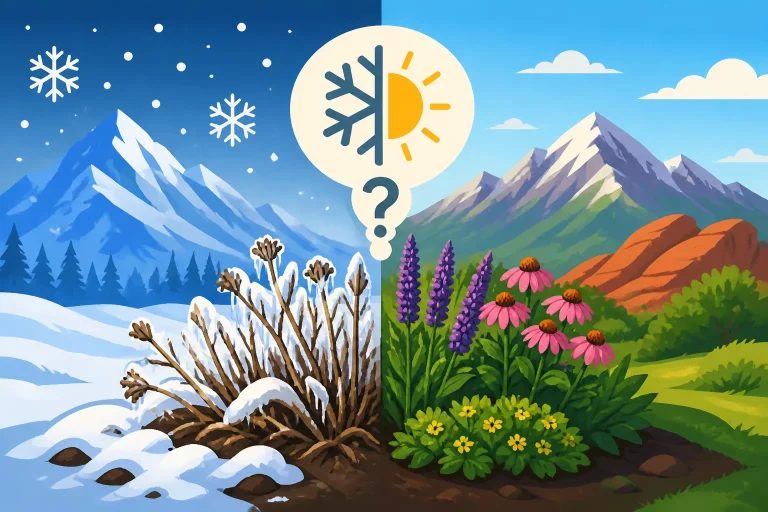
A hardiness rating describes a plant’s ability to withstand winter cold. It does not summarize every condition that affects plant health. A perennial may tolerate the coldest part of your winters yet struggle with drying wind, poor drainage, a hot wall, or too little summer moisture. Another plant might handle local winter temperatures but fail because it needs a growing season, soil conditions, or light that your site does not provide.
That distinction matters across Colorado, where broad landscape regions contain many different settings. A garden on an exposed, windy lot is not necessarily equivalent to a sheltered garden nearby. Mountain valleys, slopes, foothills, and plains can each have their own patterns of cold, wind, snow cover, sun, and seasonal moisture. The map gives you one important piece of the planting decision: winter cold tolerance. You still need to assess the other pieces.
Think of a hardiness zone as a filter:
- It can help you rule out plants that are poorly suited to your area’s winter cold.
- It can help you compare plant labels and regional recommendations.
- It cannot tell you whether a plant will tolerate your soil, exposure, moisture, or summer conditions.
- It cannot guarantee survival in an unusually harsh winter or in a particularly exposed spot.
For help interpreting what the map can and cannot tell you, see Reading the USDA Plant Hardiness Zone Map for Winter Survival. If you are comparing the map with a ZIP-code result, Using the USDA Plant Hardiness Zone Map by ZIP Code explains why the result should be treated as a starting point rather than a precise reading for every garden.
Why zones vary across Colorado’s plains, foothills, and mountains
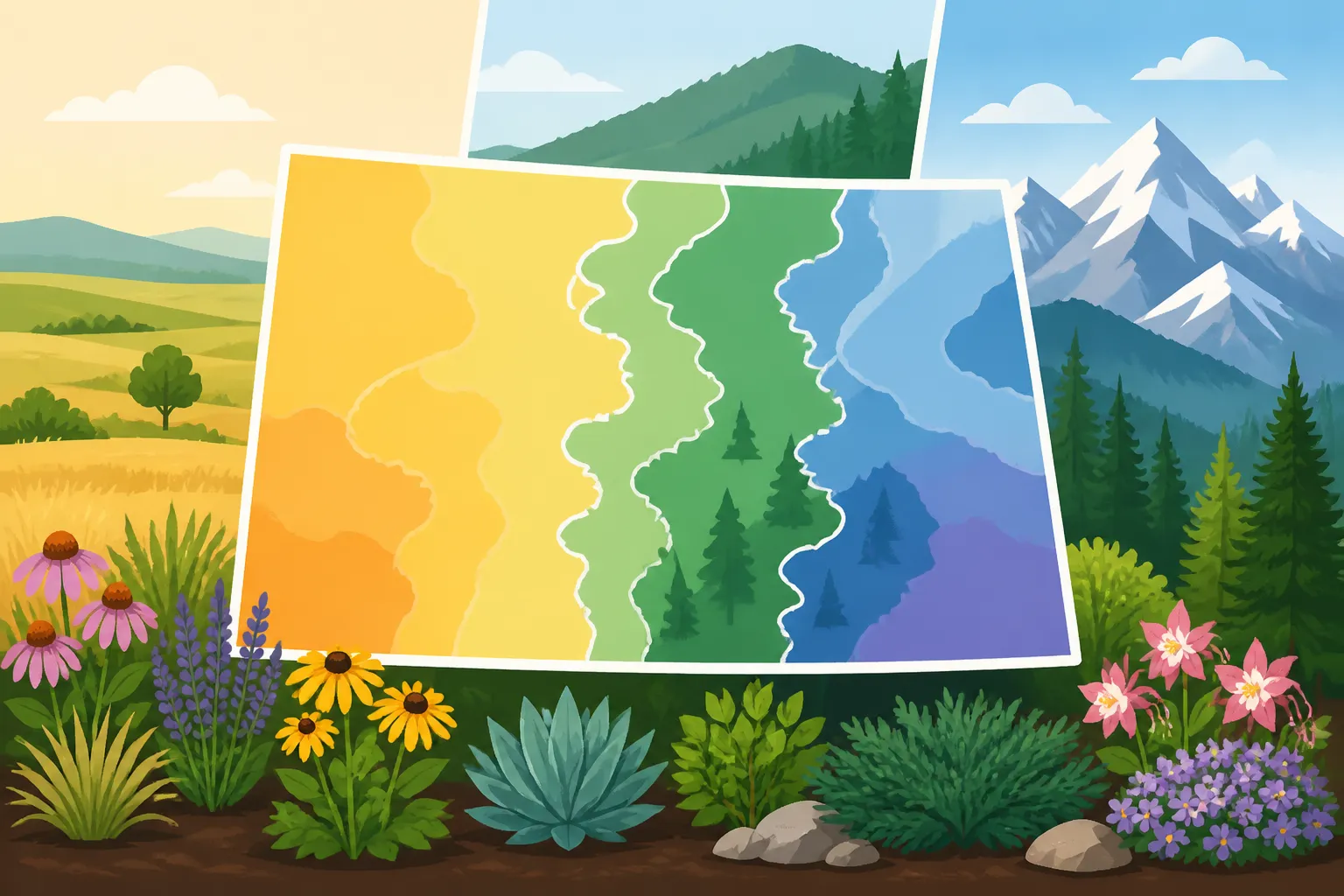
Colorado is not one uniform planting environment. Elevation, terrain, wind, snow, slope exposure, and the shape of the surrounding land all affect how a garden experiences winter. The map is useful for showing broad geographic patterns, but it cannot describe every sheltered corner or exposed slope.
Plains gardens
On the plains, a garden’s exposure can be as important as its general location. Open sites may face strong wind and rapid temperature shifts. A fence, building, or established planting may offer shelter, while a nearby open patch remains more exposed. Sun also matters: a south-facing wall or paved surface can create a warmer pocket during sunny periods, but that warmth does not remove the risk of cold weather returning.
Dry conditions can add to winter stress. Some perennials are damaged not only by cold but also by moisture loss from foliage and soil. Wind can increase that drying effect, especially where plants have little protection. Snow cover may insulate some planting areas, while wind-scoured spots receive less protection. These differences can exist within the same property.
When you choose plants for a plains garden, consider how open the site is, where winter wind tends to come from, and whether the soil drains well. The map can help narrow the list, but a sheltered border and an exposed corner may need different plant choices or different levels of protection.
Foothill gardens
Foothill terrain can change over short distances. Slope direction, elevation, nearby ridges, and the amount of shelter from surrounding land can all affect local conditions. A spot that receives strong afternoon sun may behave differently from a shaded hollow or a slope exposed to wind. Even when two gardens appear close together, they may not experience the same winter stress.
Slope and drainage deserve particular attention. Water can move downhill, collect in low spots, or drain quickly from raised or sloping ground. A plant that tolerates local cold may still be at risk if its roots remain in poorly drained soil or if the site dries out quickly. These are reasons to assess the planting location itself instead of relying on a regional label alone.
For a deeper look at how terrain and local conditions influence hardiness, see Colorado Hardiness Zones Across Plains, Foothills, and Mountains and Colorado Plant Hardiness: Navigating Front Range Zone Ranges. The useful takeaway is not that one broad label fits every foothill garden, but that local exposure and terrain can help explain why plant performance varies.
Mountain gardens
Mountain gardens can face a combination of cold, wind, snow, and a shorter period of suitable growing conditions. The details depend on the specific site. A sheltered garden near a building may have different winter protection from an open site, while a wind-exposed slope may lose snow cover and dry out more quickly. A low spot may collect cold air or water, creating challenges that are not obvious from a map alone.
Winter hardiness and growing-season fit are separate questions. A perennial may survive winter cold but still need more time or warmth to establish, flower, or complete its growth cycle than the site can provide reliably. When evaluating a plant, check its winter rating along with its light, moisture, soil, and seasonal requirements.
The map can help frame the winter-cold question; it cannot describe the full growing conditions of a mountain garden. For practical context on elevation and season length, see How Elevation Changes Colorado Frost Dates and Season Lengths and High-Elevation Perennial Gardening for Colorado Mountain Towns.
How to use a zone result without overtrusting it
A map result is most useful when you treat it as one part of a decision rather than a final verdict. Start with a location that represents the garden reasonably well, then compare that result with what you know about the exact planting spot.
A ZIP-code lookup can be convenient, but a ZIP code covers more ground than a single garden. It cannot account for every change in elevation, slope, shelter, or exposure within that area. A result is therefore a regional clue. It is not a measurement of conditions at a particular house, yard, or planting bed.
Use this process when checking a plant’s winter suitability:
- Check the map for your general area. Use the USDA Plant Hardiness Zone Map to get a broad starting point. Avoid treating a ZIP-code result as if it represents every spot in that ZIP code.
- Read the plant’s label or description. Note its stated winter-hardiness range or rating, as well as its other growing requirements.
- Compare the plant’s cold tolerance with the local result. If the plant is rated for conditions that appear marginal for your area, consider whether you can give it a more protected location. Do not assume that a warm microclimate will reliably compensate for a poor match.
- Assess the planting spot. Look for wind exposure, reflected heat, shade, drainage problems, and places where snow tends to collect or blow away.
- Consider the plant’s whole growing cycle. Ask whether the site provides the light, moisture, soil, and growing conditions the plant needs, not just whether it may tolerate winter.
- Use local experience carefully. A plant thriving in a neighbor’s garden is useful evidence only if the site and care are similar. A protected courtyard and an open slope may not be comparable.
If the result seems inconsistent with what you observe, do not assume that either the map or your observations must be wrong. The map describes broad patterns; your observations describe a particular site. The difference is a reason to look more closely at where the garden sits and what conditions shape it.
For another look at the limits of map readings, Can Your Colorado Garden Zone Differ From Your ZIP-Code Result? focuses on why a broad location result may not match the conditions in an individual yard. Finding Your Extreme Winter Lows on the USDA Zone Map can also help explain how the map relates to winter cold, while keeping in mind that a garden’s survival depends on more than that measure.
Read the whole plant label, not only the zone
Plant labels often make winter hardiness easy to spot, which can make the rating seem like the main buying decision. It is important, but it is not a full care description. A good plant match also depends on sunlight, soil drainage, moisture needs, wind tolerance, mature size, and the conditions needed for healthy growth.
Cold tolerance is only one requirement
A plant rated for conditions colder than your garden may still struggle if it needs soil that drains quickly and your planting bed stays wet. A plant suited to a sheltered border may fail on an exposed slope. One that prefers consistent moisture may be difficult to keep healthy in a dry, windy position. The hardiness result does not answer these questions.
Check the plant’s requirements before you buy or plant it. Look for details about:
- Light: Does it need full sun, partial shade, or more protection from hot afternoon exposure?
- Soil: Does it need well-drained ground, tolerate heavier soil, or prefer a particular soil texture?
- Moisture: Does it need regular moisture, tolerate dry conditions once established, or suffer when roots stay wet?
- Exposure: Is it suited to windy or exposed locations, or does it need shelter?
- Seasonal needs: Does it have enough time and suitable conditions to grow and flower in your setting?
- Mature size: Will it fit the space without being crowded by structures or neighboring plants?
If the label gives a hardiness range, read it alongside the rest of the description. Avoid choosing a plant based on a single number alone. A rating can help you screen a plant for winter cold, but the best choice is one whose other needs also match the site.
Decide how much risk is acceptable
Some gardeners want dependable plants that need little special attention. Others are willing to try a plant that is marginal for their site, particularly in a sheltered location or a container that can be moved. There is no single right level of risk. The important part is knowing what the rating does and does not guarantee.
For a low-risk planting, favor plants whose stated needs fit the garden and avoid relying on a protected pocket as the only reason a borderline plant might survive. If you want to experiment, try a limited planting first, choose the most favorable site, and keep an eye on the plant through changing seasons. A successful result in one spot does not necessarily mean the same plant will perform equally well elsewhere in the yard.
Containers deserve extra care when you are assessing winter suitability. A plant’s roots in a container experience different conditions from roots in surrounding garden soil, and a pot may be more exposed to cold and drying than a bed. A plant that is suitable in the ground may not be equally reliable outdoors in a container. If wintering potted plants is part of your plan, see Can Potted Perennials Survive Colorado Winters Outdoors?.
Match the plant to the site you actually have
It is tempting to select plants for the garden you hope to create, especially when a favorite plant is sold as hardy for the broader area. Before planting, look closely at the intended location. A hot, sunny strip beside pavement, a shaded north-facing border, and a windy corner all place different demands on plants.
If the site has a difficult combination of conditions, start with the conditions you cannot easily change. You may be able to improve the soil or add a windbreak, but you cannot always change the exposure, available light, or local drainage. Choose plants that tolerate the site’s limiting conditions rather than expecting a zone rating to make the mismatch disappear.
Microclimates: why one yard can hold several growing conditions
A microclimate is a small area with conditions that differ from its surroundings. In a Colorado garden, a wall, slope, fence, tree canopy, low spot, or paved area may affect how much wind, sun, heat, cold, or moisture a plant receives. These features can make a planting location more or less favorable than the broader map suggests.
A warmer microclimate is not always a better one. A sunny wall may warm a site during the day, but that does not mean it protects plants from every cold period. A roof overhang may reduce wetting, which can help some plants but leave others short of moisture. A windbreak may reduce drying, while dense shade may limit flowering or leave moisture lingering. Each feature changes more than one part of the growing environment.
Observe the yard before choosing a permanent planting
Spend time noticing how conditions vary across the property. It is more useful to track clear patterns than to assume that every sheltered spot is warm or every low area is cold. Consider these questions:
- Where does winter wind seem strongest?
- Which areas collect snow, and which are usually exposed?
- Does water drain away from the planting site or remain there?
- Does a wall or pavement reflect heat onto nearby plants?
- Which beds receive sun for much of the day, and which remain shaded?
- Are there places where plants repeatedly dry out or show winter damage?
Notes about these patterns can help you make better choices when the next planting decision comes around. They can also help explain why two plants with similar labels perform differently in nearby locations.
Let the most demanding plant requirements guide placement
Use the garden’s favorable spots for plants with narrower needs. A plant that struggles with wind may be a better candidate for a sheltered border than an exposed corner. A plant that needs dependable drainage may suit a slope better than a low area that holds water. A sun-loving plant belongs where it receives suitable light, not simply where the hardiness map seems most favorable.
At the same time, do not assume that a protected site solves every problem. A sheltered courtyard might reduce wind while increasing heat. A wall may reflect sun and warm the soil, but also create a dry pocket. Consider the combined conditions rather than labeling a location simply “warm,” “cold,” or “protected.”
Microclimates can also guide how you manage expectations. If a plant has borderline winter suitability, the most protected site may improve its chances, but it does not make the plant a guaranteed fit. Consider that planting an experiment is different from relying on it as a permanent, dependable part of the landscape.
Choosing perennials for Colorado’s varied settings
Once you understand the map result and the garden’s local conditions, you can make a more informed shortlist. Start with the conditions you want to support, then look for plants whose needs fit those conditions. This approach is more reliable than choosing by appearance first and trying to make the site work afterward.
For open, windy sites
Prioritize plants that are described as suited to exposure or capable of tolerating dry conditions, where those traits match the site. Look at how much shelter the plant needs, and do not overlook the effect of winter drying. A plant can be cold-tolerant and still suffer when exposed foliage loses moisture.
If a location is exceptionally open, consider whether a windbreak or a different planting location is practical. Avoid placing delicate or shelter-dependent plants there merely because the regional zone appears suitable. The map is not a measure of wind resistance.
For slopes and fast-draining ground
Check whether the plant can handle the site’s moisture conditions. Soil on slopes may drain more quickly or dry sooner than level ground, while the shape of the property may direct water toward lower areas. The zone result does not tell you whether roots will receive enough moisture or whether runoff will affect the bed.
If you are unsure about the soil, observe it after watering or rain and notice whether it stays wet or dries quickly. For broader soil preparation questions, Colorado Garden Soil Preparation: Building Beds and Soil Tilth offers related guidance. Improving soil structure can help, but it cannot turn every site into the ideal location for every plant.
For shaded or sheltered spots
Shelter can reduce exposure, but shade also changes the light available for growth. Check whether the plant requires sun for flowering or healthy growth. A sheltered spot may be a good place to protect a plant from wind, but it is not necessarily suitable if the plant needs more light.
Likewise, a sunny wall can create extra warmth and reflected heat. Plants beside it may need more attention to moisture than plants farther away. Use the plant’s light and moisture requirements together with the map result rather than treating shelter as a universal advantage.
For mountain sites
Look beyond winter survival to the growing conditions the plant needs. The site’s seasonal pattern may affect whether a plant can establish and complete its growth. Consider the amount of shelter, the exposure to wind, the availability of moisture, and the length of the period in which growth can proceed.
A plant’s survival in one mountain garden does not prove that it will work throughout the region. The successful garden may have unusual shelter, a favorable slope, or different moisture conditions. Use local examples as clues, then compare the site and care with your own.
For more on matching plants to the varied conditions of the state, see Understanding USDA Plant Hardiness Zones Across Colorado and Picking Perennials That Reliably Survive Local Winter Cold. The goal is not to find one list that suits every property. It is to find plants that fit both the broad winter-cold context and the conditions of the actual planting spot.
Common mistakes when interpreting Colorado zones
Treating a ZIP-code result as a yard-level reading
A ZIP-code result can make the map easier to use, but it represents an area, not every garden within it. Local changes in terrain and exposure can matter. Use the result to orient your decision, then assess the site.
Assuming a plant will thrive because it is rated hardy
Hardiness describes winter tolerance, not every requirement for growth. The plant may still need different soil, moisture, light, or shelter. Read the full description before choosing it.
Assuming a higher or lower zone tells the whole story
A zone label does not describe wind, snow cover, drainage, or the length of the growing season. Avoid using it as a shortcut for all climate-related questions. For guidance on the separate question of planting timing, see Colorado Frost Dates and Planting Calendar: Mountain to Plains. A winter-hardiness map and a planting calendar answer different questions.
Treating a microclimate as a guarantee
A protected corner may improve a plant’s chances, but protection from one stress does not remove every other stress. A warm wall can also increase drying; a sheltered hollow may hold moisture; a tree canopy may reduce light. Assess the whole location.
Confusing winter survival with a successful growing season
A perennial may live through winter without flowering well or growing strongly. Conversely, it may grow well during mild conditions but be vulnerable in a severe winter. Consider both persistence and performance when evaluating a plant.
Ignoring what happened in previous seasons
A map result is not a substitute for observation. If a plant repeatedly suffers in a particular bed, look at the local conditions before replacing it with another plant carrying a similar hardiness rating. The cause may be exposure, drainage, moisture, or light rather than winter cold alone.
A practical decision checklist
Before planting a perennial, work through a short set of questions. The aim is not to find perfect certainty; it is to avoid making the map do more work than it can.
- What does the map suggest about winter cold in my general area?
- Is the plant’s stated hardiness a reasonable match for that context?
- What are the plant’s requirements for sunlight, moisture, soil, and drainage?
- Is the intended site exposed, sheltered, sloped, low, shaded, or affected by reflected heat?
- Does the plant need growing conditions that may be difficult to provide at this location?
- Am I choosing a dependable plant or intentionally trying a borderline one?
- Can I observe or manage the site in a way that supports the plant without assuming success is guaranteed?
When the answers point in different directions, pause before planting. You might choose a different plant, move the planting site, or try a small number of plants as an experiment instead of building a whole border around an uncertain match.
The same approach works when replacing a plant that did not survive. Note where it was planted and what conditions it experienced. If the location is windy, wet, dry, shaded, or unusually exposed, a replacement with a similar zone rating may encounter the same problem. Look for a plant suited to the actual stress you observed.
Colorado hardiness zones are most useful when they support a broader site assessment. Read the map for regional winter-cold context, use the plant label to check cold tolerance, and then evaluate the garden’s own conditions. That combination provides a more realistic basis for choosing perennials across plains, foothills, and mountain settings.
Frequently Asked Questions
Does a Colorado hardiness zone tell me exactly which plants will survive?
No. It helps you judge whether a perennial is likely to tolerate winter cold, but it cannot account for every condition at a planting site. Soil, moisture, wind, snow cover, light, and growing-season needs also matter.
Is a ZIP-code result precise for my garden?
It is a useful starting point, not a yard-level reading. Conditions can differ within the area represented by a ZIP code, so assess the exact planting spot as well.
Can a sheltered location make a borderline plant a safe choice?
Shelter may reduce some stresses, such as wind exposure, but it cannot guarantee survival. Consider what the shelter changes about sun, heat, moisture, and airflow, and treat a borderline plant as an experiment if the fit is uncertain.
Should I choose plants by hardiness zone alone?
No. Use the zone to screen for winter tolerance, then compare the plant’s other requirements with the site. A good match takes the whole garden location into account.
Sources
- USDA Agricultural Research Service — 2023 USDA Plant Hardiness Zone Map | USDA Plant Hardiness Zone Map (checked November 15, 2026)
Disclaimer
This article is for general informational purposes only and does not constitute professional advice. Laws, prices and regulations vary by location and change over time. Consult a qualified professional for guidance on your specific situation. Colorado Gardening Guide is not a government agency and is not affiliated with any university extension, state department of agriculture or other government agency.