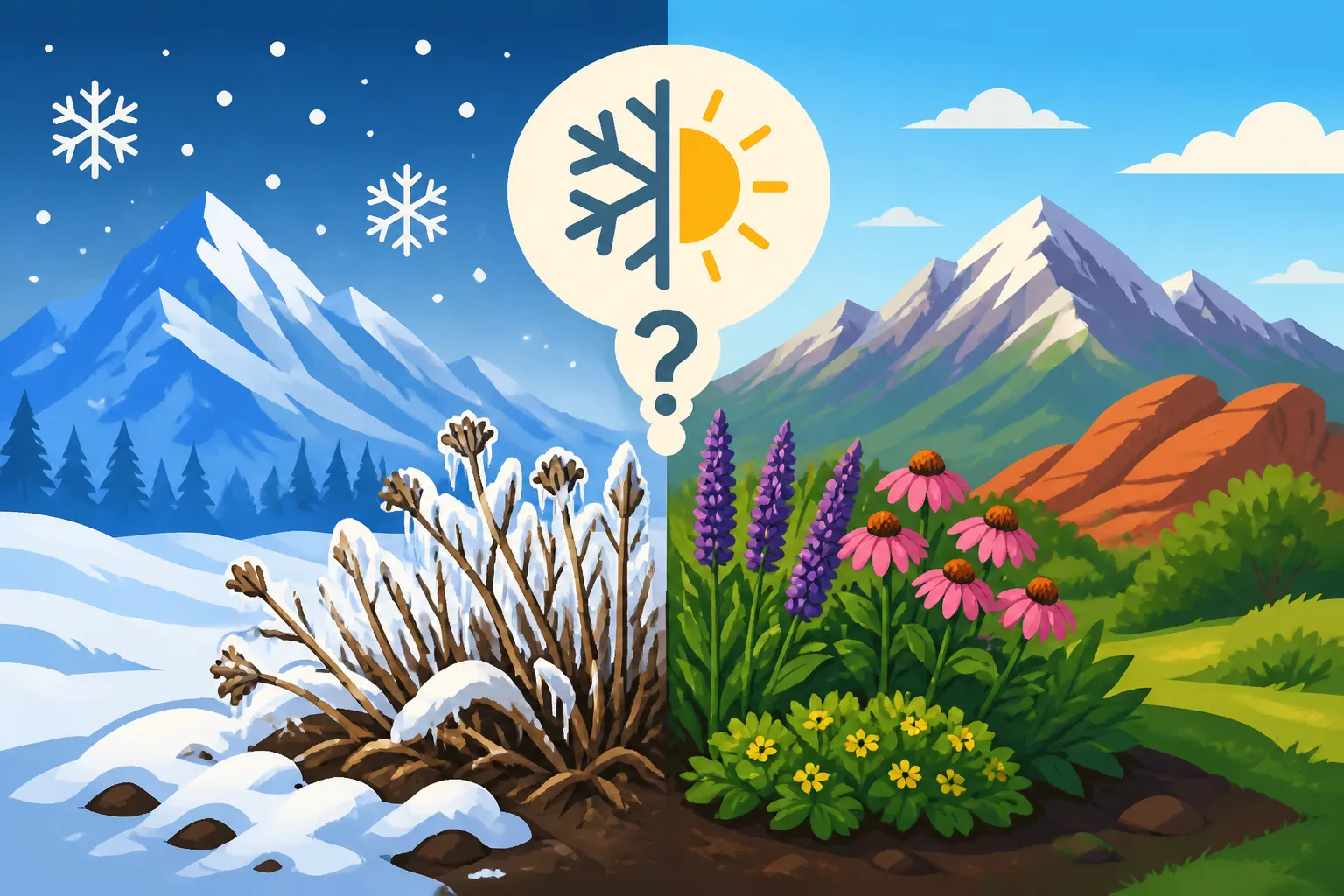
Will Perennials Survive Extreme Winter Cold if Your Zone Changed?
A changed hardiness zone can make a familiar perennial feel like a risky bet, but it does not mean the plant is destined to die. In Colorado, a map result is a starting point—not a forecast for a particular garden bed. Here’s how to interpret the change, assess your plants and growing conditions, and decide whether to protect, replace, or keep a perennial.
What a zone change tells you—and what it doesn’t
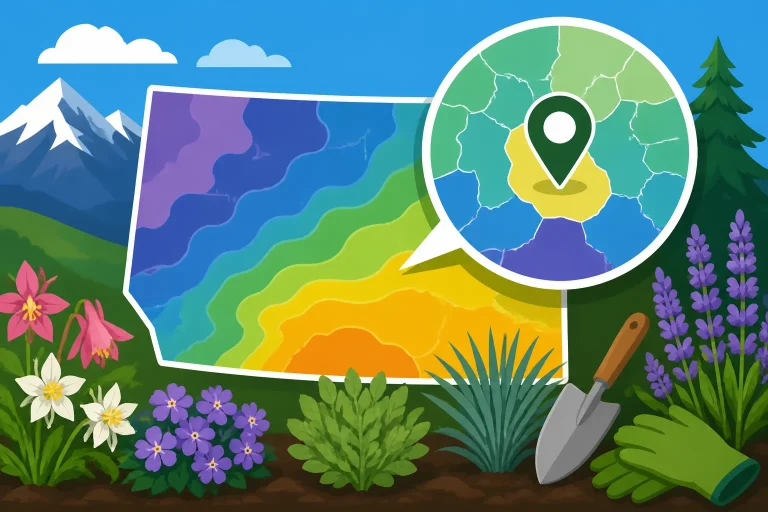
The USDA Plant Hardiness Zone Map is useful for comparing winter cold across locations, but a changed result is not a verdict on every plant in your garden. The map is based on the average annual extreme minimum winter temperature, according to the USDA Agricultural Research Service. That describes a climate pattern; it does not predict the coldest temperature in a particular winter or show exactly what happens in a specific bed.
A zone result can change when the map’s underlying climate information or boundaries are updated. A location may fall in a different zone on a newer map even though the garden itself has not changed. The result is worth taking seriously, especially for plants near the edge of their cold tolerance, but it does not mean every perennial that grew successfully before will fail from now on.
It also doesn’t tell you how a plant will respond to every part of Colorado’s winter. Cold is one part of the picture. Wind, sun, soil moisture, drainage, snow cover, and when a cold spell arrives can all affect how a perennial fares. Two gardens with the same map result can offer quite different conditions at plant level.
If your zone changed, think of it as a reason to review your choices and watch vulnerable plants—not as an instruction to remove them. For context on how the map works and what it can and cannot tell you, see USDA Plant Hardiness Zones: Choosing Colorado Perennials and Can Your Colorado Garden Zone Differ From Your ZIP-Code Result?.
A rating is a screening tool, not a guarantee
A plant’s listed hardiness rating can help you screen for potential winter risk. If a perennial is rated for conditions colder than your garden is likely to experience, that may offer a wider margin for error than a plant rated right at the edge. But ratings are not a guarantee that a plant will survive in every spot or a promise that it will fail if a zone changes.
A plant can struggle even when its rating appears to fit because the bed is exposed, the soil stays wet, or the plant enters winter stressed. Conversely, an established perennial may continue growing in a spot where the zone result alone suggests caution. Its history in that particular garden is useful information, though it cannot promise how it will handle every future winter.
A zone is not a planting calendar
Hardiness zones relate to winter cold, not to when spring planting is safe or how long a vegetable season will last. A zone change does not, by itself, tell you when frost will arrive or when to set out tender plants. For that distinction, see Why Winter Zones Do Not Determine Vegetable Planting Dates and Colorado Frost Dates and Planting Calendar: Mountain to Plains.
Why a perennial’s winter survival depends on more than the map
A perennial’s outcome is shaped by its own condition, its location, and the sequence of weather and soil conditions it encounters. That is why a map result should be considered alongside what you can observe in the garden.
The plant’s condition going into winter
A plant that has grown steadily and developed a healthy root system may be better positioned to handle ordinary stress than one that is newly planted, weakened, or struggling. This is not a guarantee of survival; it is a reason to consider the plant’s overall condition before blaming a changed zone.
Look for clues from the growing season. Was the perennial producing healthy foliage and new growth, or did it show persistent wilting, dieback, or poor growth? Was it affected by drought, waterlogged soil, pests, or physical damage? A plant already under stress may be more vulnerable when winter conditions become difficult.
Recent planting can also change the picture. A perennial that has not yet settled into its site may be less established than a plant that has grown there for some time. Keep an eye on it, but avoid assuming that a slow start is proof that its hardiness rating is wrong. Planting conditions, root disturbance, and care after planting can influence how it establishes.
The bed’s exposure and microclimate
Your garden’s small-scale conditions may differ from the broader area represented by a map. A sheltered bed near a building can experience different wind and sun exposure from an open, exposed spot. A slope, wall, overhang, or surrounding planting can also affect how a particular place behaves through winter.
Those differences cut both ways. A sheltered location may reduce some forms of exposure, while a spot that receives strong winter sun or dries out quickly may present a different challenge. A low area that holds water can be less suitable for a plant than a well-drained bed nearby. Don’t assume that “sheltered” always means “safer”; consider the specific conditions the plant experiences.
Observe the plant’s immediate surroundings. Is the bed exposed to drying wind? Does the soil remain wet after snowmelt or winter precipitation? Is the area shaded, or does it receive direct sun during periods when the plant is dormant? Does the location shed snow quickly, or does snow tend to remain? These details help explain why plants in the same yard can have different outcomes.
For ways to assess local conditions, see Using Microclimates to Grow Borderline Perennials in Colorado and Colorado Hardiness Zones Across Plains, Foothills, and Mountains.
Moisture, drainage, and winter stress
Cold is not the only winter concern. Soil that stays saturated can create problems for plants that need good drainage, while very dry conditions can also leave plants stressed. A perennial’s needs vary, so consider what its growing information says about soil and moisture rather than relying on a single general rule.
Avoid treating extra winter protection as a substitute for suitable soil conditions. A cover over a plant will not fix a bed that repeatedly holds water around its roots. Likewise, adding water without checking the soil can worsen an already wet site. If you are unsure whether drainage is part of the problem, observe the bed after rain or snowmelt and consider whether water moves away or lingers.
Winter conditions can change quickly. A period of mild weather may be followed by a sharp cold spell, and the timing can matter to a plant that has begun active growth. You cannot control the weather, but you can avoid creating additional stress through poorly matched planting sites or care that does not suit the plant.
Snow cover, wind, and exposure
Snow can change the conditions a plant experiences at ground level, but its presence and depth are not something to count on as permanent protection. A wind-exposed site may lose insulating cover more quickly, while an area sheltered by the garden’s layout may behave differently. These are site observations, not guarantees that a plant will or will not survive.
When you review winter damage, note whether it appeared across the whole plant or was concentrated on the side exposed to wind or sun. Compare plants in different parts of the yard, especially if they are the same kind of perennial. A pattern can help you identify whether the problem is associated with the plant choice, the planting spot, or both.
How to assess a perennial before you replace it
If the zone result changed, start with the plant and its growing location. A deliberate assessment can help you avoid removing a perennial that may continue to do well, while also helping you identify a plant that would benefit from a better site or a different choice.
Check the plant’s stated needs
Confirm the plant’s identity and look up its recommended growing conditions from reliable plant information. Check its cold tolerance, preferred soil, drainage, light, and moisture needs. If the plant has a label or record from the time it was bought, use that as a starting point, but verify the identification if the label is missing or uncertain.
Then compare those needs with the conditions in your bed. A plant might be within a suitable cold range but still be poorly matched to heavy, wet soil or an exposed location. Alternatively, a plant whose rating seems marginal may have performed well in a sheltered spot. The goal is to understand the full match, not to make the zone label carry the whole decision.
If the plant’s identity is uncertain, avoid making a replacement decision based on a guessed rating. Take clear notes about its appearance, flowering, and location. A local garden professional or a plant diagnostic service may be able to help identify it; use the provider’s official information to find current contact details.
Look at the plant’s history
A perennial that has returned and grown well through past winters in the same bed has already shown that the site can suit it under the conditions it has experienced. That history is useful, but it does not eliminate risk. A different winter can present a different combination of cold, wind, moisture, and timing.
Keep a simple record of what you observe: where the plant is, whether it emerges and flowers, which parts show damage, and whether neighboring plants respond differently. A photo from the same spot can make it easier to compare changes over time. The purpose is not to predict the weather, but to build a clearer picture of how the plant responds in your garden.
Be patient when assessing spring emergence. A perennial that appears slow may not be dead. Check for signs of living growth before digging it up, and avoid disturbing the root area merely because nearby plants have started growing. If you cannot tell whether it is alive, give it time and seek plant-specific advice rather than assuming the zone change caused its loss.
Distinguish winter injury from other problems
Browning, dieback, or poor flowering can have causes other than cold. Drought stress, excessive moisture, disease, pests, physical damage, and unsuitable light or soil can produce symptoms that resemble winter injury. Look for patterns and consider what happened during the growing season as well as after winter.
Ask yourself:
- Does damage occur on exposed sides or across the entire plant?
- Do nearby plants show similar symptoms?
- Does the soil stay wet or become very dry?
- Did the plant show signs of stress before winter?
- Is the plant growing in conditions that match its stated needs?
These observations may help narrow down the issue, but they do not amount to a confirmed diagnosis. If the symptoms continue or spread, consult a qualified local professional for plant-specific help. Avoid applying a treatment until you have a reasonable understanding of the cause and have read any relevant product label.
Compare the plant with nearby examples
Look at other perennials in similar locations, not just those in a different part of town or a different part of the yard. A nearby plant growing in a comparable bed can offer useful context, though it still cannot predict what will happen to your plant. Differences in age, establishment, soil, and exposure can explain different results.
You can also compare the same perennial in contrasting spots in your yard. If one thrives in a protected bed while another struggles in an open one, that may point toward a siting issue rather than a problem with the plant’s general suitability. Make changes cautiously and keep track of what you alter so that later observations are meaningful.
Ways to reduce risk without overreacting
A changed zone can be a good prompt to improve the conditions around a vulnerable perennial. The most useful action depends on the cause of risk. Protection may help with exposure, but it will not correct every problem, and extra work is not always necessary for plants that continue to thrive.
Put the plant in a better-matched location
If a perennial is repeatedly damaged in an exposed or poorly drained bed, consider whether a different site would better match its needs. Look for a location with appropriate light, soil, and moisture as well as a more suitable level of shelter. A change of site may address a more basic mismatch than adding protection each winter.
Transplanting also has trade-offs. Moving a plant can disturb its roots and temporarily set it back. Before moving it, check plant-specific guidance for suitable timing and handling. If the plant is healthy and has been growing well, leaving it in place and monitoring it may be less disruptive than relocating it solely because a map result changed.
When choosing a replacement, favor a perennial whose stated conditions fit both the winter climate and the actual planting site. A plant well suited to the bed is often a more dependable choice than one selected only for its appearance or a single rating. See Picking Perennials That Reliably Survive Local Winter Cold and Perennials for Colorado Sun, North-Facing Walls, or Partial Shade.
Use seasonal protection carefully
A protective covering or mulch may be appropriate for some plants or conditions, but the right method depends on the perennial and the reason for concern. Avoid piling material against crowns or using a covering that traps unwanted moisture or heat. Follow plant-specific recommendations, and check the bed’s condition rather than applying the same approach to every perennial.
Protection also requires attention when conditions change. A cover that is useful during cold or wind exposure can create a different problem if it remains in place under warm, sunny conditions. Check that any material is suitable for the plant and remove or adjust it according to reliable guidance.
For tender flowers and plants that are vulnerable to sudden weather shifts, see Protecting Tender Garden Flowers From Colorado Hail and Cold Snaps. That topic is related to seasonal protection, but it does not replace checking what a particular perennial needs through winter.
Keep the soil and watering approach appropriate
Good site preparation and appropriate watering can reduce avoidable stress, but there is no single watering schedule that suits every garden bed. Check soil moisture and drainage, and consider the plant’s needs and current conditions. Do not assume a plant needs extra water simply because winter is approaching, and do not ignore a bed that stays wet.
Mulch may help manage soil conditions, but it is not a universal cure. Choose materials and application methods that suit the plant and site, and avoid burying the crown. If you are considering a soil amendment, make sure there is a clear reason for it; changing soil without understanding the problem can create new issues.
Keep a range of choices in the garden
For a new planting, it can be sensible to combine dependable, locally suitable perennials with a few plants you are willing to monitor. That approach lets you enjoy more variety without relying on every plant to tolerate the most challenging conditions in the yard. It also gives you a chance to learn which locations work for less cold-tolerant choices.
A plant that needs a favorable microclimate is not automatically a poor choice, but it may need more attention or may be a less reliable fit for a demanding site. Be honest about the care you want to provide. If you prefer a lower-maintenance bed, choose plants whose stated needs closely match the conditions you can offer.
A practical decision path after your zone changes
Use the changed result as a prompt for observation and planning, rather than as a reason to clear the bed. This sequence can help you decide what to do while keeping the decision tied to the plant and its location.
- Confirm the plant’s identity. Find reliable information about its cold tolerance, soil, moisture, and light needs. Do not make a decision based on a plant name you are unsure of.
- Compare those needs with the actual site. Check wind exposure, sun, drainage, and how the soil behaves. A map result cannot describe all of these conditions.
- Review the plant’s condition and history. Note whether it has returned and grown well, whether it showed stress before winter, and where any damage appears.
- Look for a cause you can address. If the bed is persistently wet, exposed, or otherwise mismatched, consider whether a site change or a different plant would be more effective than adding a cover.
- Choose a response proportionate to the risk. A healthy plant with a good record may simply need monitoring. A struggling plant may need a better location, different care, or replacement.
- Observe what happens next. Record changes and compare similar plants in similar sites. Revisit the decision based on what the garden shows, not only on a map label.
For plants in a borderline location, a trial approach can be useful. Keep a valued plant where it is if it has been performing well, while choosing a more cold-tolerant option for a new or exposed bed. If a perennial repeatedly fails despite suitable care, replacing it with one better matched to that location may be more practical than repeatedly protecting it.
If a plant has sentimental or landscape value, there may be good reason to keep it and provide extra attention. If the goal is a dependable, low-maintenance planting, a plant that is a poor fit for the site may not be worth the effort. There is no single right choice; it depends on what you value and how much maintenance you want to take on.
Think of a zone change as a prompt to refine your plant choices. It can help you notice where a more careful match is useful, but it does not erase what you have already learned from the garden. Your plant’s health, its location, and the way it responds to actual winters all matter.
Frequently Asked Questions
If my zone changed, should I replace all my perennials?
No. A changed result signals that it is worth reviewing plants that may be near the edge of their cold tolerance, but it does not show that every perennial will fail. Consider the plant’s health, its growing history, and the conditions in its bed before deciding.
Can an established perennial survive if its rating no longer matches my zone?
It may continue to grow, particularly if it is well suited to its site, but past success does not guarantee future survival. Check the plant’s needs, monitor its condition, and decide whether its location needs to change.
Does a hardiness zone tell me when to plant?
No. The zone map relates to winter cold and is not a frost-date calendar or a schedule for planting. Use local planting guidance for timing decisions, and see Colorado Frost Dates and Planting Calendar: Mountain to Plains.
Are plants rated for colder conditions always the safest choice?
A rating can help with selection, but it does not address every factor that affects plant performance. Soil, drainage, exposure, light, and moisture still matter. Choose a plant that fits the whole site, not just the winter rating.
Sources
- USDA Agricultural Research Service — 2023 USDA Plant Hardiness Zone Map | USDA Plant Hardiness Zone Map (checked November 15, 2026)
Disclaimer
This article is for general informational purposes only and does not constitute professional advice. Laws, prices and regulations vary by location and change over time. Consult a qualified professional for guidance on your specific situation. Colorado Gardening Guide is not a government agency and is not affiliated with any university extension, state department of agriculture or other government agency.