Colorado Plant Hardiness: Navigating Front Range Zone Ranges
A hardiness-zone result can look precise, yet gardens along Colorado’s Front Range can vary sharply over short distances. That makes it easy to choose a perennial that is technically rated for a zone but poorly suited to a particular yard. The key is to use the map as a starting point, then account for exposure, elevation, soil, and the separate timing demands of a planting calendar.
What a Front Range hardiness zone can and cannot tell you
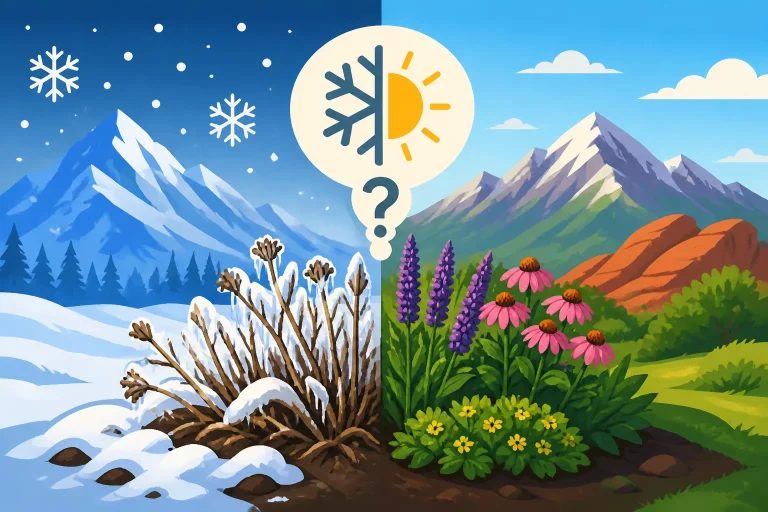
A plant hardiness zone is a tool for thinking about winter cold and the ability of perennial plants to survive it. It is useful when comparing a plant’s stated cold tolerance with the general winter conditions associated with a location. It does not promise that a plant will thrive, nor does it account for every condition that shapes a garden.
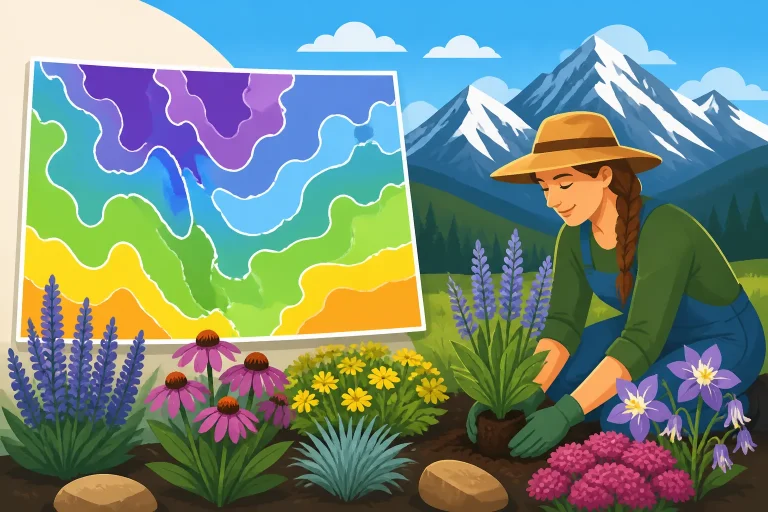
According to the USDA Agricultural Research Service, the USDA 2023 Plant Hardiness Zone Map is the standard by which gardeners and growers can determine which perennial plants are most likely to thrive at a location. The word “likely” matters. A map designation is a guide to a broad climate pattern, not a guarantee for an individual garden bed.
The map is most useful when you are choosing plants that must live through winter outdoors. It can help narrow a list of shrubs, trees, and perennials, especially when a plant label or catalog lists a cold-hardiness range. It can also help explain why a plant that performs well in one part of the Front Range may struggle in another.
But the map does not tell you whether a perennial will handle summer heat, drying wind, intense sun, alkaline soil, poor drainage, or a late spring freeze. Nor does it tell you when to sow vegetables or set out tender annuals. Those questions depend on other information, including local weather patterns, soil temperature, the crop’s cold tolerance, and the conditions of your specific site.
It helps to think of hardiness as one part of plant matching rather than a verdict. A plant needs to tolerate the winter conditions where it is planted, but it also needs a suitable growing environment through the rest of the year. A perennial that can survive winter cold might still decline in a hot, exposed bed if it prefers cooler conditions or more consistent moisture. Another may tolerate cold well but fail where winter soil stays wet.
For Front Range gardeners, the map is a sensible filter:
- Use it to compare the expected winter cold at a location with a perennial’s stated hardiness.
- Treat a close match as a reason to investigate the plant further, not as proof that it will succeed.
- Check whether the plant also suits the site’s sun, soil, drainage, wind exposure, and water availability.
- Use a separate planting calendar for vegetables and other plants whose success depends on spring frost and soil warmth.
For more detail on how the map works, see Reading the USDA Plant Hardiness Zone Map for Winter Survival. If you are comparing a map result with a plant label, USDA Plant Hardiness Zones: Choosing Colorado Perennials can help frame the decision around long-term survival rather than a label alone.
Why Front Range zone ranges need a local reading
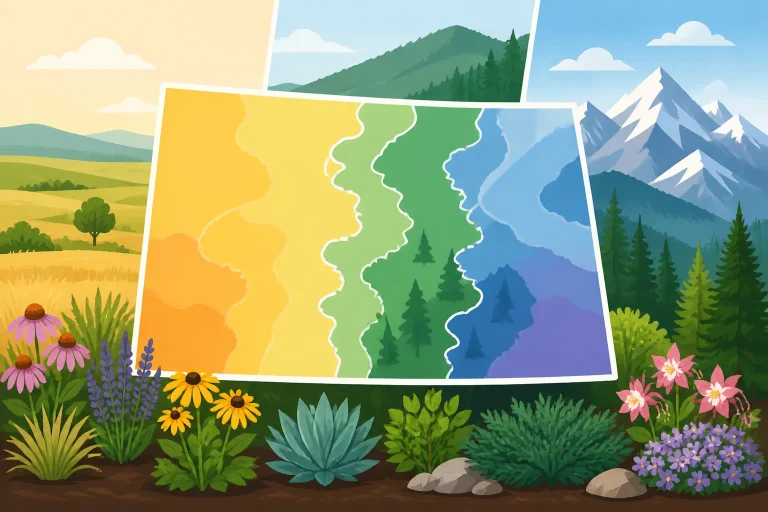
The Front Range is not one uniform garden environment. Conditions shift with elevation, slope, wind exposure, nearby buildings, shade, and the position of a yard within the broader landscape. That variation helps explain why a regional zone range should not be treated as a single, exact answer for every property.
A map assigns a broad designation to a location based on climate information. A ZIP-code result can be useful as an initial reference, but a ZIP code covers more area than a single garden. It cannot describe the warmth of a sheltered courtyard, the cold pooling in a low spot, or the exposure of an open slope. A map result is therefore best understood as a regional clue rather than a measurement of the conditions at every planting site within that area.
This distinction can be especially important where landscape changes quickly. A yard in a sheltered neighborhood may experience different winter stresses from a more exposed property nearby. A slope can shed cold air differently from a low area. Walls and paving can retain warmth, while open ground may be more exposed to wind. Even within one yard, a protected foundation bed and a wind-swept corner can present different challenges.
The difference between the regional map and the garden itself is sometimes called a microclimate. Microclimates do not replace the map; they explain why a plant may perform differently from what a broad designation seems to suggest. A warmer spot may help a borderline plant, while an exposed or unusually cold pocket may make a plant less reliable than the map would imply.
That is why it is worth combining the map with observations of your property. If a plant has survived for years in a nearby garden, that can be a useful clue, but it does not prove it will do well in your yard. The neighboring site may have different shelter, soil, watering habits, or winter exposure. Look for similarities in conditions rather than relying on location alone.
A practical way to interpret a regional range is to ask what the range represents:
- Is it describing a broad area rather than your exact garden?
- Does your property sit in an exposed, sheltered, elevated, or low-lying position?
- Are there sheltered planting spots that differ from open beds?
- Does the plant label describe winter tolerance only, or does it also provide guidance about sun, soil, and moisture?
- Is the plant being considered for a permanent landscape position, or for a seasonal planting that can be replaced?
These questions are more useful than trying to make a broad map resolve every local difference. For more context about how ZIP-code results compare with garden conditions, read Using the USDA Plant Hardiness Zone Map by ZIP Code and Can Your Colorado Garden Zone Differ From Your ZIP-Code Result?. The range across the region is also covered in Colorado Hardiness Zones Across Plains, Foothills, and Mountains.
How microclimates change plant performance
Microclimates are the local conditions that make one part of a property warmer, colder, windier, sunnier, or wetter than another. In Front Range gardens, those differences can affect a plant’s winter survival just as meaningfully as the broad regional designation. Paying attention to them can help explain both successes and failures.
Exposure and shelter
Wind can dry stems and foliage, expose plants to colder conditions, and remove protective snow from a planting bed. A wall, fence, hedge, or other landscape feature may reduce exposure, but it may also create heat or shade that changes the growing environment. The goal is not simply to find the warmest spot. It is to find a place whose full conditions suit the plant.
An exposed site may be a poor choice for a plant that is vulnerable to drying winter winds, even if the regional designation appears suitable. A sheltered bed can improve the odds for a plant near the edge of its cold tolerance, though shelter cannot make a fundamentally unsuitable plant reliable in every winter.
Sun and reflected heat
The amount and quality of sunlight matter throughout the growing season. A sunny bed may warm earlier and dry faster, while a shaded bed can remain cooler and hold moisture longer. South- or west-facing walls and paving may reflect heat onto nearby plants. That can be helpful for some warmth-loving plants, but it may stress plants that prefer cooler conditions.
A sun label should be read in relation to the actual site. A location that seems sunny during one part of the day may be shaded during another, and nearby structures can change light patterns as the season progresses. Observe the bed before choosing plants, especially if you are deciding between full-sun and partial-shade options.
Slope and cold-air movement
The shape of the land affects how cold air moves. Low areas may collect cold air, while higher or sloping ground can offer different conditions. This is one reason a garden can experience a frost or cold injury that seems inconsistent with a nearby weather report. A weather station describes conditions at its location; a yard can differ because of its position and surroundings.
A low pocket is not automatically a bad garden site, but it may be a poor place for a plant that is sensitive to cold or spring freezes. Likewise, a slope that is exposed to wind may present its own problems. Consider the combined effect of position, exposure, and shelter rather than assuming that one feature determines the result.
Soil and drainage
Hardiness-zone information does not describe soil. A perennial that tolerates winter cold may still fail in compacted, poorly drained, or persistently wet ground. Soil that dries quickly can create a different challenge, especially in an exposed bed or during periods of heat. Before planting, observe how water moves through the site and whether the soil tends to stay wet or dry.
For a new garden bed, it can help to assess the soil before selecting plants. Colorado Garden Soil Preparation: Building Beds and Soil Tilth covers soil conditions and bed preparation, while How to Test Garden Soil Drainage Rate Before Digging Plant Beds focuses on checking drainage before planting.
Use a site inventory
A simple site inventory turns vague impressions into useful decisions. Walk the yard at different times and note where sunlight reaches, where wind is strongest, where snow tends to remain, and which beds dry quickly. Pay attention to any recurring winter damage or spring cold pockets. The purpose is not to create a precise climate model. It is to make plant choices fit the conditions you can observe.
You can also track how established plants behave. A perennial that suffers winter dieback in one spot may be reacting to exposure, drainage, or a late freeze rather than simply being “wrong for the zone.” A plant that thrives in a protected location may not perform as well when moved into an open bed.
When choosing a plant, compare the map designation with the site inventory. A plant that suits both the broader winter conditions and the local exposure is a stronger choice than one selected on a map result alone. For plants near the limits of their stated tolerance, choose the most favorable suitable spot rather than asking the plant to cope with every stress at once.
Choosing perennials with a hardiness result
Perennial plants return across growing seasons, so winter survival is a central part of choosing them. The map can help you rule out plants that are clearly mismatched to a location, but a good choice also depends on the plant’s needs and the conditions you can provide.
Start by identifying the plant’s stated hardiness. Labels and plant descriptions may use a zone range or another description of cold tolerance. Compare that information with the map result for the location, while remembering that the regional result is not a guarantee for a particular bed. If a plant is near the colder edge of its stated tolerance, think carefully about exposure, drainage, and how much risk you are willing to accept.
Then look beyond winter. Check whether the plant needs full sun, partial shade, or a more protected exposure. Consider its moisture preferences and whether it can handle the soil conditions in the intended bed. A plant with suitable cold tolerance but incompatible water or sunlight needs may struggle even if it survives winter.
Some gardeners prefer reliable, well-matched perennials for places where consistent performance matters. Others are willing to experiment with plants near the edge of their tolerance, especially in a sheltered spot. Neither approach is inherently better; the difference is in the level of risk and the time you want to spend replacing or protecting plants.
| Planting situation | What the hardiness result contributes | What to check before deciding |
|---|---|---|
| A perennial intended for an exposed bed | A starting point for comparing winter cold tolerance | Wind, winter drying, sun, and drainage |
| A plant close to the edge of its stated tolerance | A warning that the match may be less forgiving | Shelter, slope, cold pockets, and willingness to replace it |
| A plant for a sheltered courtyard or foundation bed | A broad regional reference, not a description of the protected spot | Reflected heat, shade, available soil, and moisture |
| A perennial for a low or damp area | Information about winter cold tolerance | Cold-air pooling and whether the soil stays wet |
| A vegetable or tender annual | Little guidance about when to plant outdoors | Frost risk, soil warmth, crop needs, and local planting conditions |
When evaluating a plant, read the entire description instead of focusing on a single hardiness term. A plant may need well-drained soil, protection from strong wind, or more shade than your site offers. These details can matter as much as the broad winter rating.
A sensible selection process looks like this:
- Identify the bed where the plant will grow, rather than starting with the plant alone.
- Check the map for a regional winter reference.
- Compare the plant’s stated cold tolerance with that reference.
- Assess sun, wind, drainage, and soil at the actual planting site.
- Decide whether the plant is a dependable fit or an experiment.
- Choose a more protected location for a borderline plant only if the other growing conditions suit it.
For a plant that is important to the structure of a landscape, reliability may be more valuable than novelty. For a small trial bed, experimenting with a plant near the edge of its cold tolerance may be reasonable. The map helps clarify the trade-off, but it cannot remove it.
Remember, too, that plant hardiness is not the same as a promise of year-round appearance. A perennial may survive but show winter damage, die back above ground, or take time to recover. If a plant’s appearance matters through winter, consider that separately from whether it can survive.
For additional help matching plants to winter conditions, see Picking Perennials That Reliably Survive Local Winter Cold and Can You Grow Plants Rated for Warmer USDA Zones in Colorado?. For broader plant selection across changing local conditions, Choosing Colorado Plants for Full Sun, Wind, and Heavy Clay can help you evaluate the other demands of a planting site.
Why the hardiness map is not a planting calendar
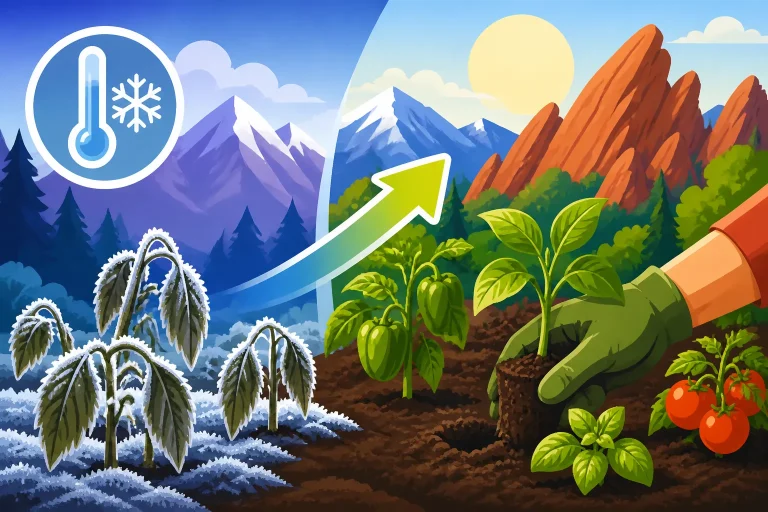
A hardiness zone helps with choosing perennial plants for winter survival. It does not provide a schedule for sowing vegetables, transplanting tomatoes, planting annual flowers, or starting other seasonal crops. Those decisions depend on the crop and the timing of local weather and soil conditions.
This distinction is easy to miss because a map designation can feel like a complete summary of a climate. It is not. The cold tolerance of an established perennial and the ability of a new seedling to handle a spring chill are different questions. A perennial may be able to survive winter once established, yet a newly planted tender crop may be damaged by a late frost. A warm-season vegetable may also need warmer soil than a cold-tolerant crop.
For planting-calendar decisions, use information that addresses the plant’s growth stage and the conditions it needs. Spring frost timing matters for tender transplants. Soil warmth matters for seeds that do not germinate well in cold ground. Elevation, exposure, and the length of the local growing period can affect whether a crop has enough time to mature.
A practical sequence is to separate the questions:
- For a perennial, ask whether it is likely to survive winter at the site.
- For a vegetable seed, ask whether the soil is suitable for germination.
- For a transplant, ask whether current and expected conditions are appropriate for setting it outdoors.
- For a harvest plan, consider the crop’s time to maturity and the conditions near the end of the growing season.
This approach prevents a common mistake: treating the zone result as permission to plant. It is not a frost forecast or a promise that the soil is warm enough. A map can help you plan the kinds of plants to consider, while a planting calendar helps you choose when to sow or transplant.
Colorado’s varied elevation and local exposures make this separation particularly useful. A gardener may have a suitable hardiness match for a perennial but still need to wait for safe conditions before planting warm-season crops. Another gardener may be able to sow cold-tolerant crops earlier than tender ones, even within the same yard.
If your main question is when to plant vegetables, see Colorado Frost Dates and Planting Calendar: Mountain to Plains. For the relationship between winter zones and crop timing, Why Winter Zones Do Not Determine Vegetable Planting Dates explains why the two tools should not be substituted for one another. Colorado Vegetable Gardening: Crops, Seasons, and Elevation offers broader context for planning around the state’s different growing conditions.
The local forecast is also relevant when deciding whether to protect or delay tender plants. A long-term climate map cannot tell you whether a cold night is approaching. For practical timing, Should Colorado Gardeners Plant by the Calendar or Forecast Frosts? explores how calendar expectations and actual weather should be weighed.
A practical way to use the map in your own yard
The most useful approach is to combine a map result with a close look at the plant and its proposed location. That keeps the map in its proper role: a planning reference for winter cold, not a substitute for observing the garden.
Start with the plant’s purpose
Think about what you want the planting to do. A foundation shrub, a pollinator perennial, and a seasonal vegetable have different requirements. For a permanent landscape plant, winter survival and long-term fit deserve close attention. For seasonal crops, planting time and the length of the growing window may be more important than a perennial hardiness designation.
You can also consider how costly a failure would be in time and effort. A small trial planting can be a low-stakes way to learn how a plant responds. A large border or a plant intended to provide screening may call for a more conservative choice.
Match the location before you settle on a plant
Look at the actual planting site. Note whether it is exposed to wind, shaded by a structure, warmed by reflected heat, or likely to collect cold air. Check how water behaves after rain or irrigation. Consider whether the plant’s light and moisture preferences fit the bed.
This step can change the shortlist. A plant that seemed like a good match based on the map may need a sheltered position. A plant that appears borderline may be more plausible in a favorable microclimate. A plant that cannot tolerate the site’s soil or sun is unlikely to become a good fit just because its winter rating looks promising.
Use the result as a filter, not a guarantee
Once you have the location and plant requirements in view, compare them with the map. If the plant is clearly outside the cold tolerance described for your area, it may be a high-risk choice. If it is a close match, look more carefully at site conditions. If it is a comfortable match, continue checking its other needs.
Do not assume a favorable zone result means that all plants carrying the same designation will perform alike. Plants vary in their tolerance of wind, wet soil, heat, drought, and seasonal temperature swings. Hardiness is only one part of a plant’s overall suitability.
Keep records and revise your choices
A garden notebook can help you remember what happened over time. Note where a plant is growing, how much exposure it gets, whether it suffered winter damage, and how it performed during the growing season. These observations can help distinguish a plant-selection problem from a location problem.
If one plant struggles, consider more than its cold tolerance before removing it or buying a replacement. The bed may be too wet, too windy, too sunny, or too exposed. A plant can also take time to establish. Reviewing the site conditions may reveal a fix, or it may show that a different plant is a better match.
When you choose a replacement, use what you learned. If the original plant struggled in a cold pocket, select a more tolerant plant for that location or move the planting to a more favorable bed. If it struggled in reflected heat, choose a plant that better suits the exposure rather than relying on the map alone.
Use separate references for separate decisions
Many garden decisions are connected, but no single reference answers them all. The hardiness map helps you consider winter survival. Plant descriptions help with light, moisture, and soil preferences. A local planting calendar helps with sowing and transplanting. Forecasts help with immediate weather decisions.
Keeping those roles distinct avoids overconfidence. A broad map cannot tell you exactly what is happening in your bed, and a forecast cannot tell you whether a perennial is a good long-term choice. Together, however, the references and your own observations make more useful decisions possible.
A concise checklist can help when you are choosing a plant:
- Identify whether the plant is a perennial, annual, or seasonal crop.
- Clarify whether your concern is winter survival, planting timing, or both.
- Look up the plant’s stated cold tolerance and growing requirements.
- Consider the map result as a broad regional reference.
- Assess the specific bed for sun, shelter, wind, slope, drainage, and moisture.
- Use a planting calendar and current weather information for sowing and transplanting.
- Revisit the decision after observing how plants perform.
The best outcome is not necessarily a garden made only of plants that are guaranteed to succeed. It is a garden where you understand which plants are dependable, which are experiments, and which conditions are likely to influence the result. The map makes that conversation clearer, while local observation makes it relevant to your property.
Frequently Asked Questions
Does a hardiness-zone result guarantee that a perennial will thrive?
No. It is a useful indicator of winter cold tolerance, not a guarantee of overall performance. Sun, soil, drainage, wind, moisture, and local exposure also affect whether a perennial thrives.
Can two gardens in the same area have different growing conditions?
Yes. Shelter, slope, shade, reflected heat, wind, and drainage can create meaningful differences between nearby planting sites. A regional map result does not describe every bed within an area.
Should I use a hardiness zone to decide when to plant vegetables?
No. Use a planting calendar and information about the crop, soil conditions, frost risk, and current weather. The hardiness map is intended to help with perennial plant selection, not to set vegetable planting dates.
What should I do if a plant is near the edge of its cold tolerance?
Treat the choice as higher risk and consider whether a more protected site suits the plant’s other needs. If dependable performance matters, choose a plant with a more comfortable match for the location. If you are willing to experiment, try it in a suitable spot and observe how it responds.
Sources
- USDA Agricultural Research Service — 2023 USDA Plant Hardiness Zone Map | USDA Plant Hardiness Zone Map (checked November 15, 2026)
Disclaimer
This article is for general informational purposes only and does not constitute professional advice. Laws, prices and regulations vary by location and change over time. Consult a qualified professional for guidance on your specific situation. Colorado Gardening Guide is not a government agency and is not affiliated with any university extension, state department of agriculture or other government agency.