Using the USDA Plant Hardiness Zone Map by ZIP Code
A ZIP-code lookup is a useful starting point when you are choosing plants, but it cannot tell you everything about your Colorado yard. The USDA Plant Hardiness Zone Map estimates how cold winters get in a region; it does not set planting dates or account for every slope, exposure, or sheltered corner. Here’s how to read your result and use it without treating it as a guarantee.
What a ZIP-code result tells you
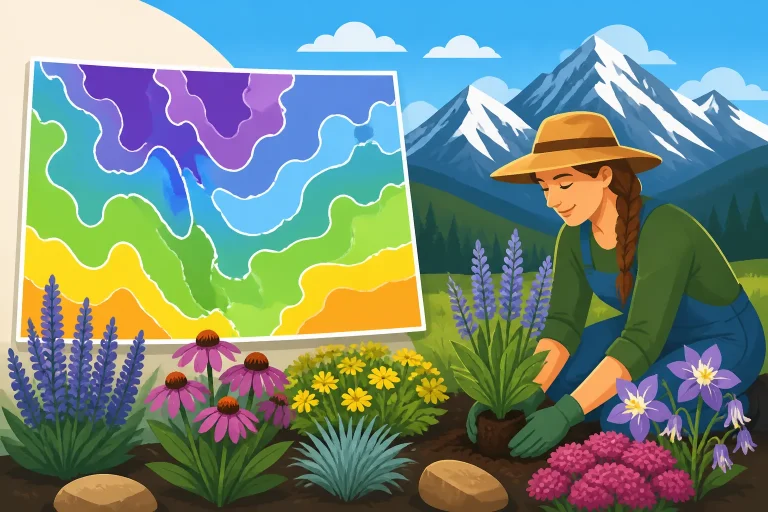
The USDA Plant Hardiness Zone Map groups locations by average annual extreme minimum winter temperature. In other words, it describes the coldest temperature a place can typically reach in an average winter, based on long-term weather data. It is designed to help gardeners compare a plant’s cold tolerance with the winter conditions in a region.
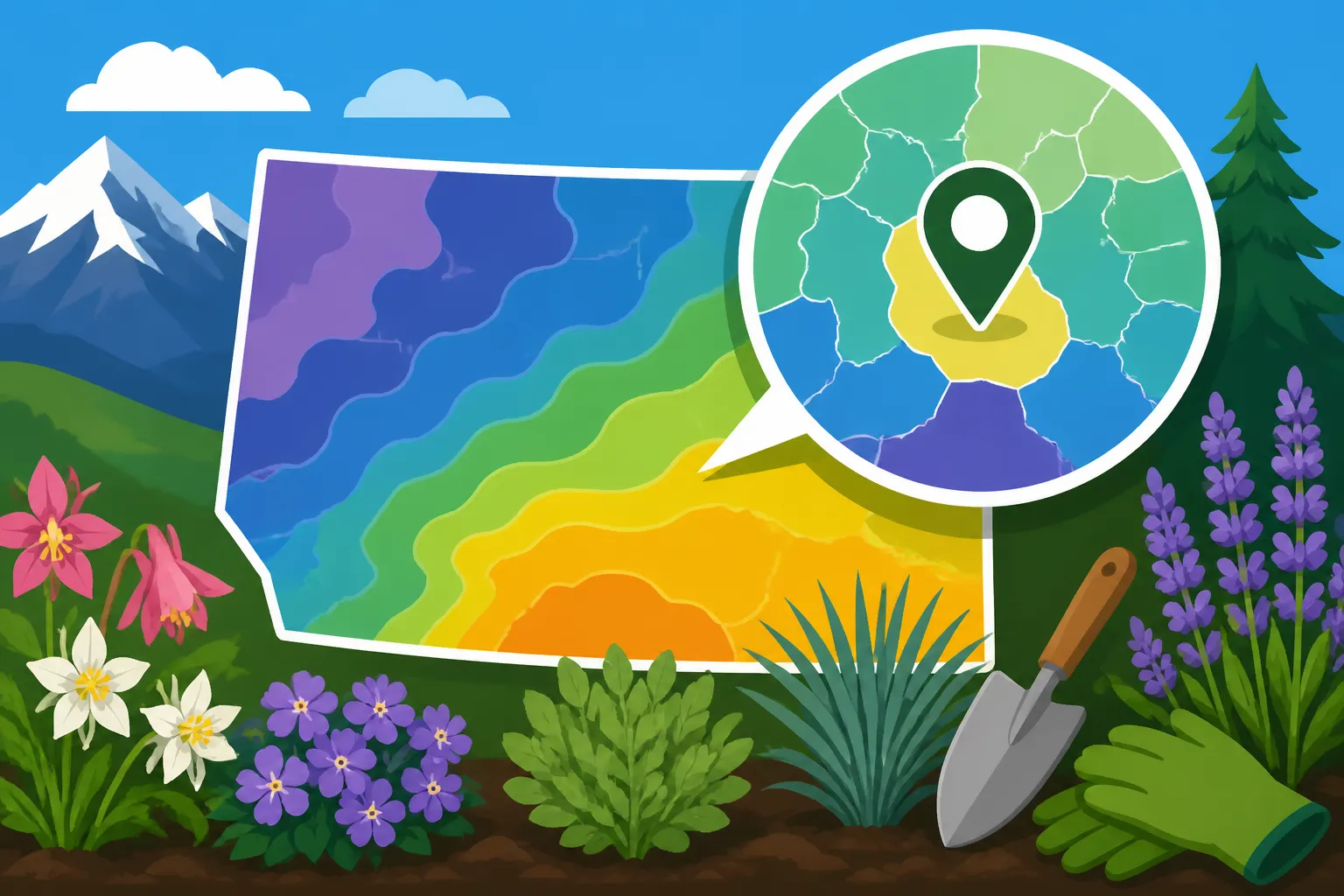
When you enter a ZIP code in the map’s search tool, the result points you toward a zone for that area. The zone is divided into smaller five-degree Fahrenheit half-zones, identified by the letters “a” and “b.” Those subdivisions help distinguish places with somewhat different average extreme winter lows within a broader zone.
The key word is average. The map does not promise that temperatures will stay within a zone’s range each winter. A particularly cold winter can be colder than the average, while a mild one can be warmer. The result is a planning reference based on a pattern, not a forecast or a guarantee that a particular plant will survive.
The map is most useful when you are considering long-lived plants that must tolerate winter outdoors, including trees, shrubs, and perennial flowers. If a plant label gives a hardiness zone, comparing that rating with your mapped zone can help you decide whether the plant is a reasonable candidate.
For example, a plant’s hardiness rating can help answer this question: “Is this plant generally suited to the kind of winter cold associated with my area?” It cannot answer whether the plant will thrive in your particular bed, whether a late spring freeze will damage new growth, or whether the soil drains well enough to keep its roots healthy.
For a broader explanation of how cold zones apply across the state, see Understanding USDA Plant Hardiness Zones Across Colorado. The central idea is simple: use the map to screen plants for winter cold tolerance, then consider the conditions at the planting site.
How to look up and read your ZIP-code result
Start with the USDA Plant Hardiness Zone Map’s official online version and enter your ZIP code in its search tool. Treat the result as a regional locator, not as a highly precise reading for your property. If the map allows you to inspect nearby areas, compare the surrounding colors and zone boundaries rather than relying only on the search label.
A practical lookup looks like this:
- Enter your ZIP code in the map’s search field.
- Note the zone and half-zone shown for the result.
- Zoom out and look at the pattern around the search area.
- Zoom in, if available, to see whether the mapped area includes nearby changes in terrain or exposure.
- Compare the result with the plant’s hardiness information and with conditions in your own yard.
- For plants that are difficult to replace or especially sensitive to cold, seek locally relevant advice before making a large planting decision.
The zone label is not a rating of overall garden quality. A lower or higher number does not tell you that a place is better or worse for gardening. It indicates a difference in average winter cold, which matters to plants’ ability to survive outdoors.
A plant label may show one zone, a range, or a minimum zone. Read the label carefully to understand what it is claiming. A minimum hardiness rating generally concerns the cold limit the plant may tolerate under suitable conditions. It does not mean that every site in a warmer zone will provide the right soil, moisture, wind protection, or growing-season conditions.
Here is a useful way to interpret the information:
| Information | What it can help you assess | What it does not tell you |
|---|---|---|
| ZIP-code zone result | The broad winter-cold conditions mapped for an area | The exact conditions at one home or garden bed |
| Half-zone designation | A finer distinction within a full zone | A guarantee against unusually cold winters |
| Plant hardiness rating | Whether a plant may tolerate local winter cold | Whether it will thrive in the site’s soil, sun, or moisture |
| Local frost information | The seasonal risk of spring and fall freezes | The plant’s ability to survive winter cold |
| Yard observations | Differences in shelter, slope, shade, and exposure | A long-term climate record by themselves |
If you are unfamiliar with the map’s zone categories, Reading the USDA Plant Hardiness Zone Map for Winter Survival explains how to interpret them in relation to plant survival. For the specific question of what a ZIP-code result can and cannot represent, Can Your Colorado Garden Zone Differ From Your ZIP-Code Result? is also relevant.
Why a ZIP code is not a yard-level forecast in Colorado
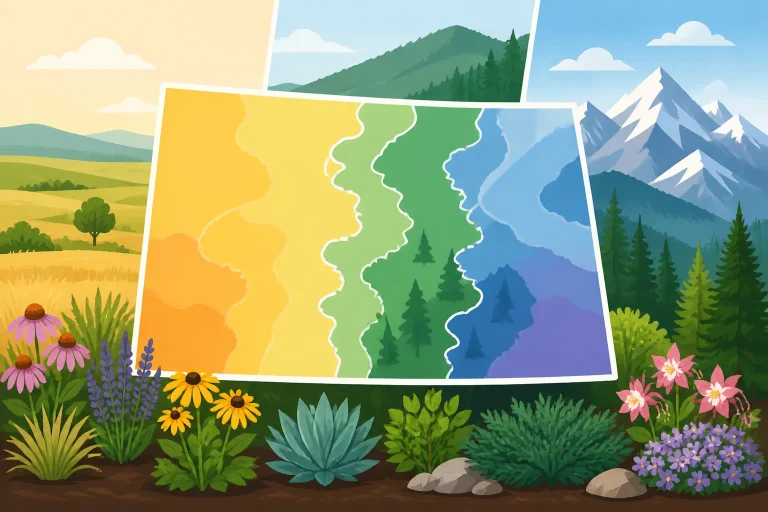
Colorado’s terrain creates sharp differences over relatively short distances. Elevation, slope, wind exposure, nearby buildings, and the shape of the land can all affect conditions around a garden. A ZIP code can cover more than one kind of setting, so one lookup may not reflect every neighborhood or planting site within it.
A yard on an exposed slope may experience different winter stress than a sheltered site nearby. Cold air can settle in lower areas, while a slope’s orientation and surrounding structures can affect how much sun and wind reach a planting bed. A wall or dense evergreen may offer some shelter, but it can also change shade, soil moisture, and temperature in ways that do not appear in a ZIP-code result.
The map is not intended to describe each of these local effects. It cannot tell you whether a specific planting spot is unusually exposed, whether snow tends to cover it, or whether winter sun and wind dry its leaves. It also cannot represent every year’s weather. Use it as a regional baseline, then look closely at the site.
Colorado gardeners should also avoid treating a mapped line as a sharp boundary on the ground. A boundary separates mapped areas, but actual conditions change gradually and locally. Two homes near that line may not have identical winter conditions, and a single property may contain several microclimates.
When a plant’s survival is an important concern, make a short site record rather than relying on the ZIP code alone. Note where snow collects or melts first, where cold air seems to linger, which beds are exposed to wind, and which areas receive winter sun. These observations will not replace the map’s long-term climate information, but they can help you decide whether a particular spot is more exposed or sheltered than the surrounding area.
For Front Range gardeners especially, mapped conditions can vary with terrain and local exposure. Colorado Plant Hardiness: Navigating Front Range Zone Ranges discusses why a broad regional result should not be mistaken for a precise description of every yard. You can also use Monitoring Colorado Microclimates to Spot Early Spring Planting Spots to think about local variations in spring conditions.
What to observe around your planting site
Before buying a plant that is near the edge of its cold tolerance, consider:
- Wind exposure: Is the site open to drying winter winds, or protected by a fence, building, or other landscape feature?
- Slope and position: Is the bed on a slope, in a low area, or on relatively level ground?
- Winter sun: Does the planting area receive direct winter sunlight, or is it shaded?
- Snow cover: Does snow usually settle around the plant, or does it melt or blow away quickly?
- Nearby surfaces: Are paving, walls, or other structures likely to affect sun, shade, or reflected heat?
- Soil drainage: Does water drain away, or might the roots remain wet for extended periods?
- Plant condition: Is the plant healthy and well established, or newly planted and still adjusting?
These observations matter because hardiness is only one part of survival. A plant that might tolerate the region’s winter minimum can still struggle if its roots are stressed, its site is too wet or too dry, or it is exposed to conditions that the label’s rating does not describe.
Use the zone to screen perennials, shrubs, and trees
For plants that remain outdoors through winter, the zone is a useful first filter. Check the hardiness rating on the plant’s label or other reliable plant information, then compare it with the area shown by the ZIP-code lookup. If the plant’s stated hardiness does not appear compatible with your mapped conditions, consider a more cold-tolerant option or a more protected planting location.
When a plant’s stated tolerance is close to your area’s mapped conditions, do not assume the outcome is certain. That is a cue to look more carefully at the site, the plant’s maturity, and how exposed it will be. A protected position may reduce some stresses, but it does not change the regional map result or eliminate the chance of an unusually severe winter.
Think about the whole plant, too. A perennial’s roots, crown, stems, or buds may respond differently to cold and winter moisture. A label’s zone rating is a useful summary, not a complete care plan. Follow planting and care information for the specific plant, and consider whether the conditions it needs are available in your yard.
For trees and shrubs, the consequences of choosing poorly can last for years. Before planting, consider the plant’s mature size, its exposure, and whether the location will suit it as it grows. A winter-hardy tree planted in poor drainage or a spot with unsuitable light can still decline. A warm-edge plant placed in a sheltered site may have a better chance than one on an exposed corner, but shelter should not be treated as proof of winter survival.
If you are deciding between plants with different cold tolerances, compare more than the mapped zone. Look at the plant’s light needs, moisture preferences, soil requirements, and expected size. Then decide whether you can provide those conditions consistently. The map helps you avoid an obvious mismatch; it does not guarantee a successful planting.
For plants that fall near the limits of your mapped conditions, ask a local nursery or Colorado gardening resource about regional performance. A plant being sold locally does not mean it is appropriate for every site, and a plant label may not account for the exact exposures found in your yard.
A useful decision rule is:
- The plant appears comfortably suited to the mapped winter conditions: Consider it, then check its site and care requirements.
- The plant is close to the mapped cold limit: Weigh the site’s shelter and exposure, and look for locally relevant guidance.
- The plant appears poorly matched to the mapped conditions: Choose a hardier alternative or treat it as a risk rather than a dependable landscape plant.
The USDA map is about winter survival, so use it for that task. For help understanding how the plant’s rating relates to cold tolerance, see Finding Your Extreme Winter Lows on the USDA Zone Map. If you are considering a plant rated for a warmer winter region, Can You Grow Plants Rated for Warmer USDA Zones in Colorado? can help frame the risks.
Do not use the zone to set vegetable planting dates
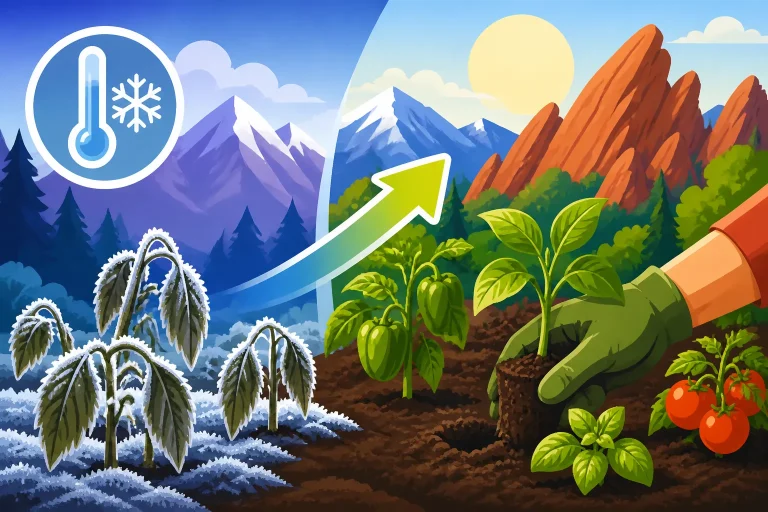
A hardiness zone is not a vegetable planting calendar. It does not tell you when the soil is warm enough to sow seeds, when a tender crop can safely go outdoors, or when your growing season begins and ends. A location can have a useful mapped zone and still face spring frosts that damage tender seedlings.
This distinction matters because winter cold and seasonal frost timing are different questions. The zone summarizes average extreme winter temperatures. Planting dates depend on factors such as spring and fall freeze risk, current weather, soil temperature, elevation, and the crop’s tolerance for cold. A ZIP-code lookup does not resolve those decisions.
Cool-season vegetables and frost-tender crops also have different needs. Some vegetables can be sown or planted while conditions are cool; warm-season crops generally need warmer soil and more protection from cold nights. Even within a region, the right timing can vary by crop, garden bed, and weather.
For Colorado vegetable planning, use local frost information and the conditions in your own garden rather than converting a zone result into a planting date. Why Winter Zones Do Not Determine Vegetable Planting Dates explains this difference in more detail. For a broader look at seasonal timing across the state, see Colorado Frost Dates and Planting Calendar: Mountain to Plains.
A sensible approach is to use separate tools for separate questions:
- Use the hardiness zone to screen perennial plants, shrubs, and trees for winter cold tolerance.
- Use local frost guidance to plan around spring and fall freeze risk.
- Check soil conditions when deciding whether to sow or transplant.
- Watch the forecast before setting tender plants outdoors.
- Adjust for the planting site, since sheltered and exposed beds can behave differently.
That approach avoids a common mistake: treating the zone as a single number that governs every gardening decision. It is one piece of planning information, not a calendar for the entire garden. For more detail on how location affects the length of the growing season, see How Elevation Changes Colorado Frost Dates and Season Lengths.
A practical way to make a planting decision
It helps to use the ZIP-code result as the first step in a short decision process rather than as the final answer. The goal is to combine regional winter information with the needs of the plant and the conditions of the specific spot.
- Look up the ZIP code. Record the mapped zone and half-zone shown for the area. Do not assume the result describes every bed on your property.
- Check the plant’s hardiness information. Compare the stated rating with the mapped result. Make sure you understand whether the label gives a range or a lower cold limit.
- Decide how costly a failure would be. A small seasonal planting is different from a tree or shrub that is expensive or difficult to replace. Use more caution for long-lived plants.
- Assess the planting site. Consider slope, wind, sun, snow cover, drainage, and shelter. A yard can contain more than one microclimate.
- Check whether the plant suits the rest of the site. Confirm that the light, soil, moisture, and space requirements are realistic for the location.
- Use the right timing information. For vegetables and spring planting, consult frost and soil-temperature guidance instead of relying on the zone.
- Choose an alternative if the match is uncertain. A plant with a comfortable cold-tolerance margin may be a more dependable choice than one near its limit.
- Keep notes. Record where plants succeed or struggle and what conditions they experienced. This helps refine future choices without mistaking one winter for a long-term pattern.
This process is especially useful when a plant is described as borderline for your area, when you are planting in a highly exposed location, or when you are choosing something that will be difficult to move later. If you are unsure, ask a local Colorado nursery or gardening resource about the plant’s performance in conditions similar to yours.
A good decision does not require predicting the exact coldest temperature your yard will experience. It means understanding what the map says, recognizing what it leaves out, and avoiding a choice that depends on the map being more precise than it is.
Common mistakes to avoid
Treating the ZIP-code result as an exact property rating
ZIP codes are convenient search inputs, but they are not designed to describe every individual garden. A result may be a useful regional indicator while still missing differences caused by terrain and exposure. If nearby areas show different conditions, take that as a reason to be cautious rather than as a reason to select whichever result seems most favorable.
Assuming the mapped zone predicts every winter
The map summarizes average extreme winter cold. It does not mean that every winter will match that average. A plant that usually survives may be damaged in a colder-than-usual winter, particularly if it is young, stressed, or planted in an exposed location.
Confusing plant hardiness with overall suitability
A plant may tolerate winter cold and still be a poor fit for a particular site. It may need different soil, light, drainage, or moisture than the garden provides. Check all of the plant’s requirements, not just its hardiness rating.
Using a zone to decide when to sow vegetables
The zone does not tell you when to plant vegetables. Frost risk, soil temperature, crop type, and local weather are more relevant to those decisions. Do not assume that a perennial cold-tolerance rating translates into a date for tomatoes, peppers, beans, or other crops.
Assuming shelter makes a marginal plant safe
A sheltered location can change a plant’s exposure, but it cannot guarantee survival. Buildings, fences, and trees may also change the site’s shade, wind, and moisture. Consider the full setting, and avoid relying on one protective feature as a substitute for a suitable plant choice.
Treating a zone boundary as a hard line
The map draws boundaries to represent mapped differences, but conditions in the landscape do not always shift abruptly at those lines. A garden near a boundary may be influenced by its own microclimate. Use the map as a guide to regional patterns, not a precise boundary between “will live” and “will not live.”
Choosing the warmest plant that might survive
A plant near the cold edge of its rating may be more vulnerable to damaging winters or a poor planting location. If you want a dependable landscape, favor plants with a comfortable margin of cold tolerance, especially for trees and shrubs. Save riskier choices for small-scale experiments or unusually protected spots.
Ignoring what happens after planting
A suitable zone match is not a substitute for establishment care. Newly planted plants may be more vulnerable than well-established ones, and stress from poor drainage, drought, or inappropriate care can affect how they handle winter. Follow the plant’s specific care requirements and monitor its condition through the seasons.
Frequently Asked Questions
Does a ZIP-code lookup give the exact hardiness zone for my home?
No. It gives a regional result associated with the ZIP code, not a guarantee for a specific address or planting bed. Local terrain, exposure, and shelter can create differences within the mapped area.
Is the hardiness zone the same as a frost date?
No. A hardiness zone describes average extreme winter cold. Frost dates relate to seasonal freeze risk and are more useful for planning when to plant vegetables and other frost-sensitive crops.
Should I choose plants rated for my zone or a warmer one?
Start with plants whose stated hardiness suits the mapped winter conditions. If you are considering a plant near or beyond its cold tolerance, weigh the risks carefully, assess the site, and seek locally relevant advice. A sheltered site may help, but it does not guarantee survival.
Can a plant rated for my zone still die in winter?
Yes. The zone is a planning reference, not a survival guarantee. An unusually cold winter, an exposed site, poor drainage, or plant stress can contribute to winter injury or loss.
Is the map useful for annual vegetables?
It is not a planting calendar for annual vegetables. Use local frost information, soil conditions, crop needs, and current weather to plan sowing and transplanting.
Disclaimer
This article is for general informational purposes only and does not constitute professional advice. Laws, prices and regulations vary by location and change over time. Consult a qualified professional for guidance on your specific situation. Colorado Gardening Guide is not a government agency and is not affiliated with any university extension, state department of agriculture or other government agency.